 openaccessexchange@gmail.com
 Mon - Fri: 9 AM to 8 PM


India’s Clean Energy Transmission Strategy and Solar Power Curtailment
Every gigawatt-hour curtailed is not just a financial loss for a developer. It is a unit of energy independence foregone, a data centre that could not be powered, a pump that did not run, a household that stayed on coal. India’s clean energy story has a paradox at its heart. In 2025, the country added a record 38 GW of solar capacity, lifting non-fossil sources past 50% of installed generation, a milestone which could be one off, still credible and a proud event.
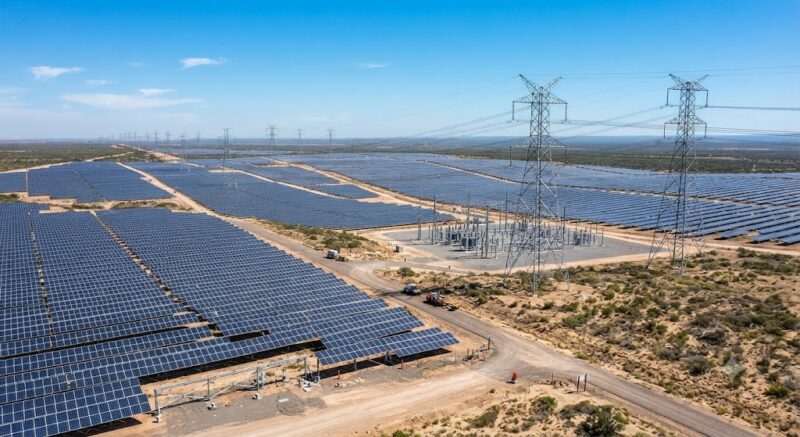
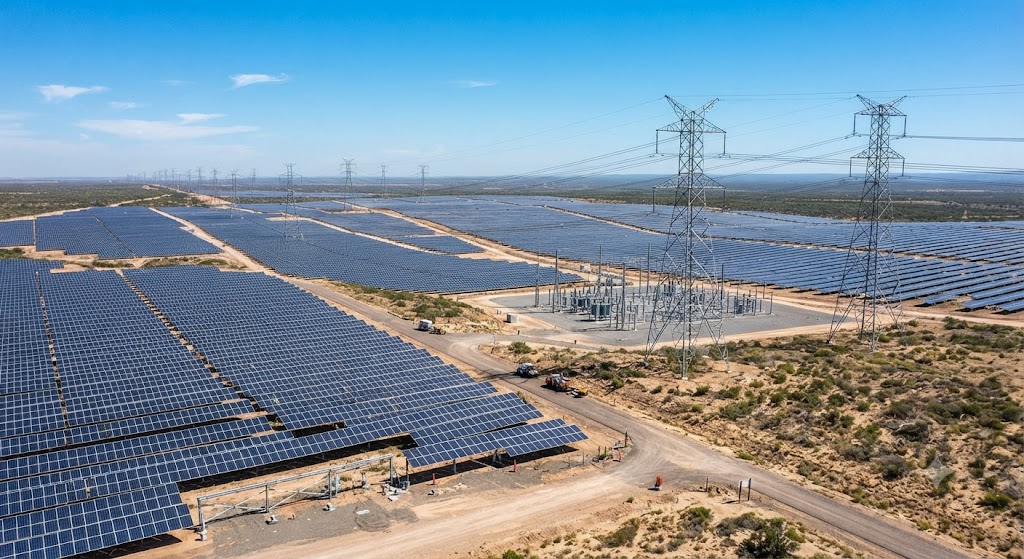
Yet a growing share of that solar is simply being switched off. Between April and June 2026, India curtailed 8,133 GWh of solar power, enough to have powered 1.4 million homes for a year. The binding constraint on India’s energy transition is no longer generation. It is the wire that carries it.
The numbers reveal the scale of the mismatch. Solar and wind farms take 12 to 18 months to build; the transmission lines to evacuate them take two to three years, sometimes longer. India built only 8,830 circuit kilometres of new lines in FY25 against a target of 15,253, a 42% shortfall.
The result is visible on the ground. In Rajasthan, curtailment at some substations has touched 80 to 90%, with renewable projects generating at only 10 to 20% of capacity not because the sun isn’t shining, but because the grid cannot absorb what is being produced. Developers are losing up to ₹50 crore per day.
In May 2026, the Khavda complex in Gujarat, one of the world’s largest renewable hubs, suffered the single biggest generation-loss event in Indian grid history when three pooling stations went offline within seconds, wiping nearly 9,000 MW of clean power from the grid in an instant.
The structural problem runs deeper than delayed construction. India’s 25-year fixed-price Power Purchase Agreements were designed for a coal-era baseload world. They oblige distribution companies to pay for power whether or not they can absorb it, and they lock transmission capacity into corridors that cannot respond to where renewable energy is actually being generated.
When solar floods the grid on a clear afternoon, these rigid contracts leave operators with almost no room to manoeuvre. The consequence is a market that oscillates between two extremes: electricity prices that hit zero on the India Energy Exchange during a cloudy May afternoon in 2026, and curtailment rates above 50% during the sunniest months in Rajasthan. Abundance and scarcity, sometimes within the same week.
The pressure on the grid is only going to intensify. Peak electricity demand hit a new record of 270.8 GW in May 2026, up roughly 12% year on year. Data centres alone are projected to add 26 GW of load by 2031-32, almost entirely expected to be served by renewable energy. Industrial demand, electrification of transport and cooking, and India’s broader economic growth are together adding load faster than either generation or transmission can keep pace.
The Central Electricity Authority estimates India needs ₹9.15 lakh crore of transmission investment and 191,000 circuit kilometres of new lines by 2032. That is not an incremental upgrade. It is a generational infrastructure programme.
Other countries have faced versions of this problem and found practical answers. Germany’s Bundesnetzagentur approved its 2 GW SuedLink HVDC corridor in 2025 with a single, time-bound permitting process, the equivalent of India’s Khavda-to-load-centre superhighway, but backed by statutory discipline.
Texas’s ERCOT grid introduced real-time co-optimisation of battery storage in late 2025, reducing system costs by over 5% purely by absorbing curtailed renewable power. Australia’s Renewable Energy Zones coordinate generation capacity, storage and transmission corridors together, so wires and panels are commissioned in lockstep rather than years apart.
And in the United States, FERC Order 2023 replaced first-come-first-served interconnection queues with cluster-based studies and withdrawal penalties, ending the speculative capacity hoarding that clogs India’s own connectivity pipeline today.
Five reforms would materially change India’s trajectory:
- India needs an NHAI-equivalent for transmission, a single empowered authority with unified Right-of-Way clearance, statutory timelines for forest and land approvals, and project-specific SPVs held to a countdown clock. The National Highways Authority of India transformed road infrastructure by eliminating multi-agency paralysis. Transmission deserves the same treatment.
- PPA structures must evolve. New procurement should move toward shorter-tenure contracts, contracts-for-difference, and virtual PPAs that price flexibility rather than lock in volume. This would free transmission capacity currently trapped by legacy agreements and open space for the dynamic, exchange-based market India is trying to build through IEX’s real-time and green windows.
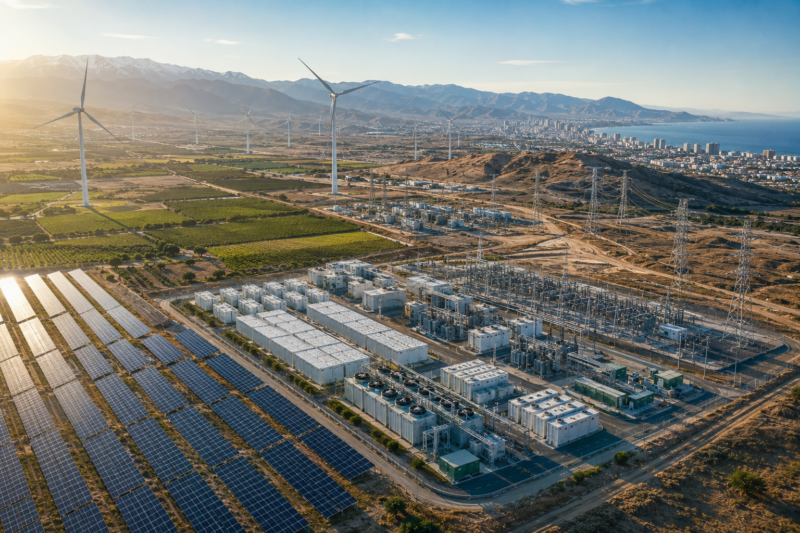
- Battery storage must be co-located with renewable projects in curtailment hotspots as a condition of connectivity, not an afterthought. Surplus midday solar stored and discharged into the evening peak transforms a market problem into a grid asset. The government’s ₹5,400 crore Viability Gap Funding (VGF) scheme for 30 GWh of storage is a start; the scale and speed need to match the urgency.
- India should adopt FERC-style interconnection reform, replacing speculative first-come queues with milestone-based, first-ready-first-served connectivity backed by meaningful withdrawal penalties. Capacity hoarding is currently distorting both pricing and grid planning.
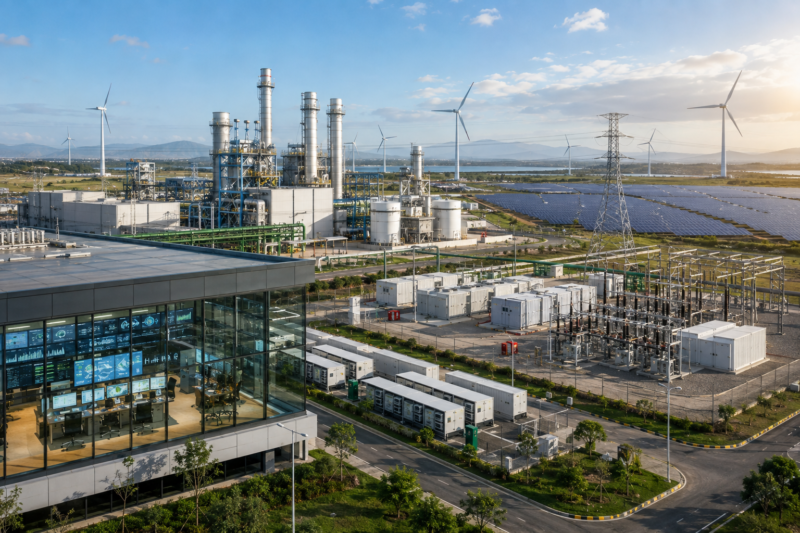
- Data centres and large industrial consumers should be actively incentivised to locate near renewable energy hubs in Rajasthan, Gujarat and Tamil Nadu. This converts stranded generation into productive computing and manufacturing load, reducing curtailment while building the industrial base India needs. The grid should be planned to serve these clusters, not the other way around.
Conclusion:
India does not lack sunlight, wind, or ambition. The Central Electricity Authority’s own planning now acknowledges that transmission must move ahead of generation, not trail behind it. The question is whether the policy machinery can move at the same speed as the renewable buildout.
Every gigawatt-hour curtailed is not just a financial loss for a developer. It is a unit of energy independence foregone, a data centre that could not be powered, a pump that did not run, a household that stayed on coal. The transition strategy is working. The transmission strategy needs to catch up.