 openaccessexchange@gmail.com
 Mon - Fri: 9 AM to 8 PM


How Indian Manufacturers Can Reduce Their Carbon Footprint in 2025 — A Practical Guide
A few years ago, a large textile manufacturer in Tirupur received a message from one of its biggest European buyers. The message was polite but firm — if the factory couldn’t demonstrate measurable progress on reducing its carbon emissions within 18 months, the contract would not be renewed.
It wasn’t an isolated incident. Across India’s manufacturing belt — from the auto-ancillary clusters of Pune to the pharmaceutical hubs of Ahmedabad — business owners are waking up to a reality that has been building for years. Sustainability is no longer a box-ticking exercise for large multinationals. It is fast becoming a fundamental requirement for doing business, winning contracts, and attracting investment.
The good news? Reducing your carbon footprint as a manufacturer doesn’t have to mean disrupting your operations or making expensive decisions overnight. It starts with understanding where the biggest opportunities lie — and then moving on them, one step at a time.
Here’s a practical guide built specifically for Indian manufacturing businesses in 2025.
1. Start With the Biggest Lever: Your Energy Source
For most manufacturers, electricity is the single largest contributor to both operating costs and carbon emissions. Which means it’s also where the biggest opportunity sits.
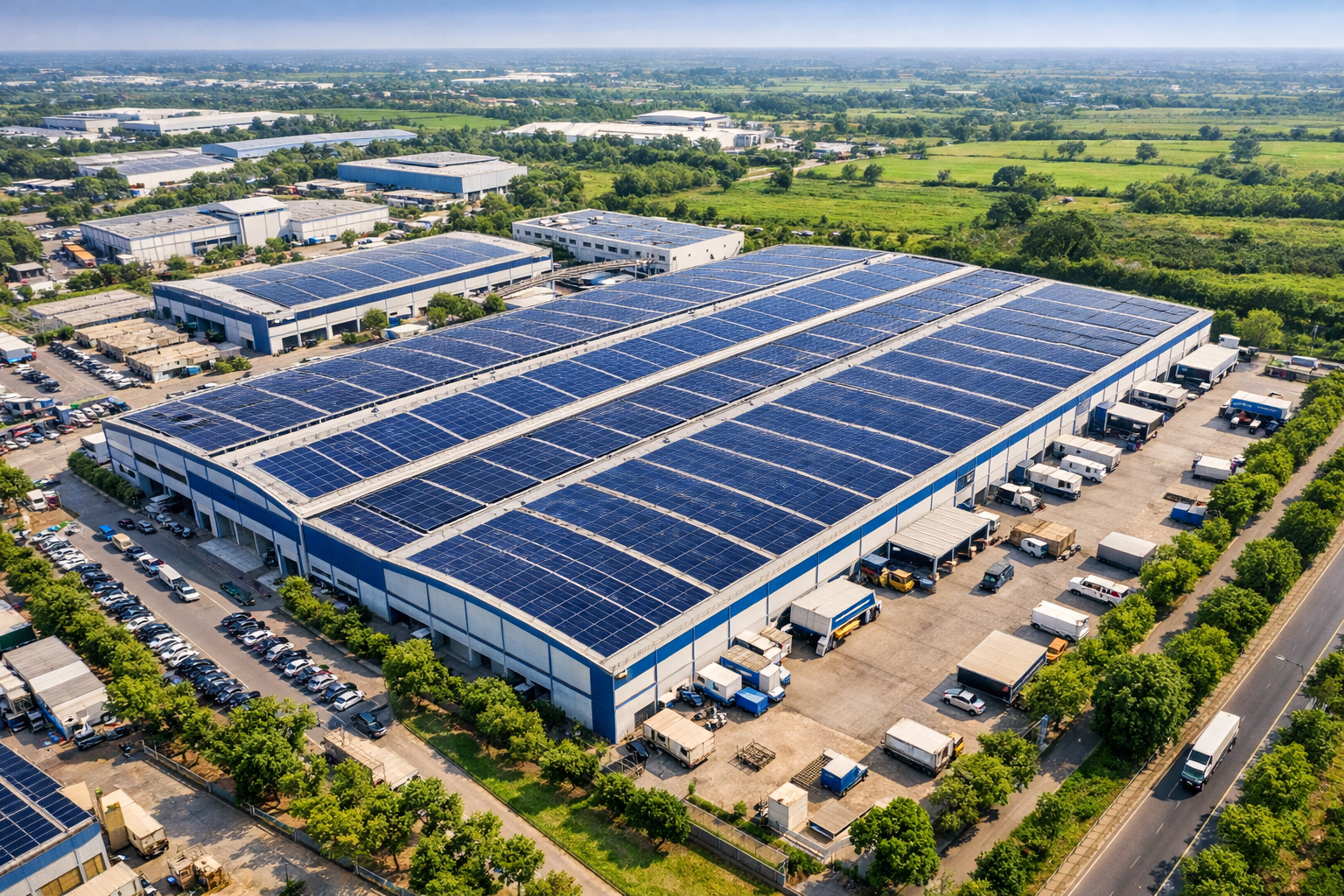
Switching from conventional grid power to renewable energy — specifically solar — is the most impactful move a manufacturer can make toward reducing emissions. And through the Open Access Solar model, this transition doesn’t require any capital investment in panels, land, or infrastructure. Your business simply enters into a Power Purchase Agreement with a solar developer, and clean energy is transmitted to your facility through the existing state grid at a fixed, lower tariff.
The result is a double benefit that very few sustainability initiatives can claim: your carbon footprint drops significantly, and your electricity bill goes down by up to 30% at the same time. For a business that is conscious of both its environmental impact and its margins, that combination is hard to ignore.
2. Treat Energy Efficiency as the Foundation, Not an Afterthought
Switching to renewable energy is powerful — but it works best when the energy you’re consuming is being used as efficiently as possible. This is where an energy audit becomes one of the most valuable investments a manufacturer can make.
A proper energy audit maps every unit of electricity your facility consumes, identifies where waste is occurring, and flags the interventions that will deliver the greatest return. What businesses typically discover is that a significant portion of their energy spend is going toward outdated machinery running inefficiently, lighting systems that belong in a previous decade, and processes that have never been examined through the lens of consumption.
Upgrading to energy-efficient equipment, replacing conventional lighting with LED systems, and introducing automated controls that prevent machines from running idle — these are changes that pay for themselves quickly and keep delivering savings for years. They also reduce the total load your facility draws from the grid, which lowers demand charges and makes your overall energy bill even more manageable. Spotify Down
3. Look Beyond Your Factory Walls — Your Supply Chain Matters Too
Here’s something many manufacturers overlook: a substantial portion of your carbon footprint isn’t generated inside your facility at all. It lives in your supply chain — in the trucks carrying your raw materials, the suppliers who haven’t yet thought about their own emissions, and the logistics networks that move your finished goods to market.
Addressing supply chain emissions doesn’t have to be complicated. Sourcing raw materials from local or regional suppliers wherever possible is one of the most effective steps — it cuts transport distances, reduces logistics costs, and builds more resilient supplier relationships at the same time. Optimising delivery routes, consolidating shipments, and gradually transitioning your logistics fleet toward electric or hybrid vehicles are all practical moves that Indian manufacturers are beginning to implement right now.
Engaging your key suppliers on their own sustainability practices is increasingly important too. Global buyers conducting due diligence on your business will often look at your entire supply chain, not just your factory floor. Building a network of green-minded suppliers strengthens your story considerably.
4. The Waste You’re Discarding Is Probably Worth More Than You Think
Manufacturing processes generate waste — that’s an unavoidable reality. But the way a business treats that waste says a great deal about how seriously it takes sustainability, and it also has direct financial implications.
The circular economy model — where materials are recovered, recycled, and reintroduced into the production process wherever possible — is gaining significant traction in Indian manufacturing. Scrap metal, plastic offcuts, packaging materials, chemical byproducts — each of these has a potential second life, either within your own operations or through partnerships with recycling organisations and other industries.
Introducing proper waste segregation systems is the logical starting point. Once you know exactly what you’re discarding and in what volumes, the opportunities for recovery and reuse become much clearer. Many manufacturers who have gone through this process have been genuinely surprised by how much of what they were throwing away was actually a resource — and how much it was costing them to throw it away.
5. Measure It — Because What You Don’t Track, You Can’t Improve
Sustainability commitments carry weight only when they’re backed by data. Saying your business is committed to reducing emissions is one thing. Being able to show a client, an investor, or a regulatory authority exactly how many tonnes of CO₂ your operations produced last year — and how that compares to the year before — is something else entirely.
Carbon tracking tools and sustainability reporting platforms are more accessible than ever, and working with a sustainability consultant to set up a proper measurement framework is an investment that pays dividends quickly. An annual sustainability report, even a simple one, signals to the market that your business is serious, transparent, and moving in the right direction. In a competitive landscape where global buyers are increasingly making procurement decisions based on supplier sustainability credentials, this kind of credibility is worth a great deal.
6. Build Sustainability Into Your Culture — Not Just Your Processes
Process changes and technology upgrades matter. But the businesses that make genuine, lasting progress on sustainability are the ones where it becomes part of how every team thinks, not just a set of mandates from the management.
Training your employees on energy conservation, responsible manufacturing practices, and the business case for sustainability creates a workforce that looks for improvements from the bottom up, not just the top down. When the person operating a machine understands why running it efficiently matters — not just for the company’s electricity bill, but for something larger — the quality of attention brought to that task changes.
Encouraging teams to propose their own ideas for reducing waste, saving energy, and improving efficiency often surfaces solutions that management would never have identified on its own. Some of the most impactful sustainability gains in Indian manufacturing have come not from expensive consultants, but from frontline workers who were finally asked the right question.
Where to Begin: A Practical Starting Point for 2025
If you’re a manufacturing business owner reading this and thinking “we should be doing more on sustainability” — you’re right. But the most important thing to understand is that you don’t need to do everything at once.
Start with your energy strategy. It delivers the fastest, most measurable impact on both your carbon footprint and your operating costs. From there, move into energy efficiency, supply chain, and waste management in a sequence that makes sense for your specific business.
At Open Access Energy, we work with manufacturers across India who are at exactly this starting point. We help them understand what Open Access Solar can realistically deliver for their specific energy profile, handle the complexities of the transition, and ensure that the solution we build is one that keeps delivering value for the long term.
The shift to sustainable manufacturing in India is not a distant prospect — it’s happening right now, in factories and industrial parks across the country. The businesses that are moving early are the ones that will carry a competitive advantage for years to come.
Ready to Take the First Step?
If reducing your carbon footprint while also cutting your power costs sounds like the kind of outcome your business needs in 2025, let’s have a conversation.
Contact Open Access Energy today. We’ll look at your energy consumption, walk you through what’s possible, and help you build a roadmap toward cleaner, cheaper, and more future-ready manufacturing operations.
Because sustainability and profitability, in 2025, are not a trade-off. They’re the same goal.