 openaccessexchange@gmail.com
 Mon - Fri: 9 AM to 8 PM


The Biggest Misconception About Open Access Power — And Why It's Costing Industries Money
There is one belief, more than any other, that stops Indian industrial businesses from exploring open access electricity seriously. It goes something like this: “We looked into it, but we don’t have the space to install solar panels. Our rooftop can’t take the load. We can’t afford the infrastructure right now.”
It is a completely understandable conclusion to reach. The phrase “renewable energy” naturally calls to mind solar panels on a rooftop or wind turbines on an open piece of land. If open access means renewable energy, and renewable energy means installing generation equipment, then open access requires installation — and installation requires space, capital, planning permission, and time that many businesses either don’t have or don’t want to spend. spotidown.net
The problem with this reasoning is that it is built on a false premise. Open access electricity does not require you to install a single solar panel, a single wind turbine, or any generation equipment of any kind on your premises. Not one. The misconception is understandable, but it is also genuinely costly — because it is keeping businesses that would benefit significantly from open access from ever making the call to find out how it actually works. spotidown mp3
What Open Access Actually Requires From You
Open access electricity is, at its core, a procurement model. It changes where you buy your electricity from, not how electricity physically arrives at your facility.
Under the framework established by India’s Electricity Act of 2003, industrial consumers above a certain consumption threshold have the legal right to purchase electricity directly from a power generator of their choice — rather than being limited to whatever their local distribution company supplies at whatever tariff it sets. That generator might be a solar power plant operating in Rajasthan, a wind farm in Tamil Nadu, or a hybrid renewable facility in Karnataka. The physical location of the generation doesn’t matter for your operations.
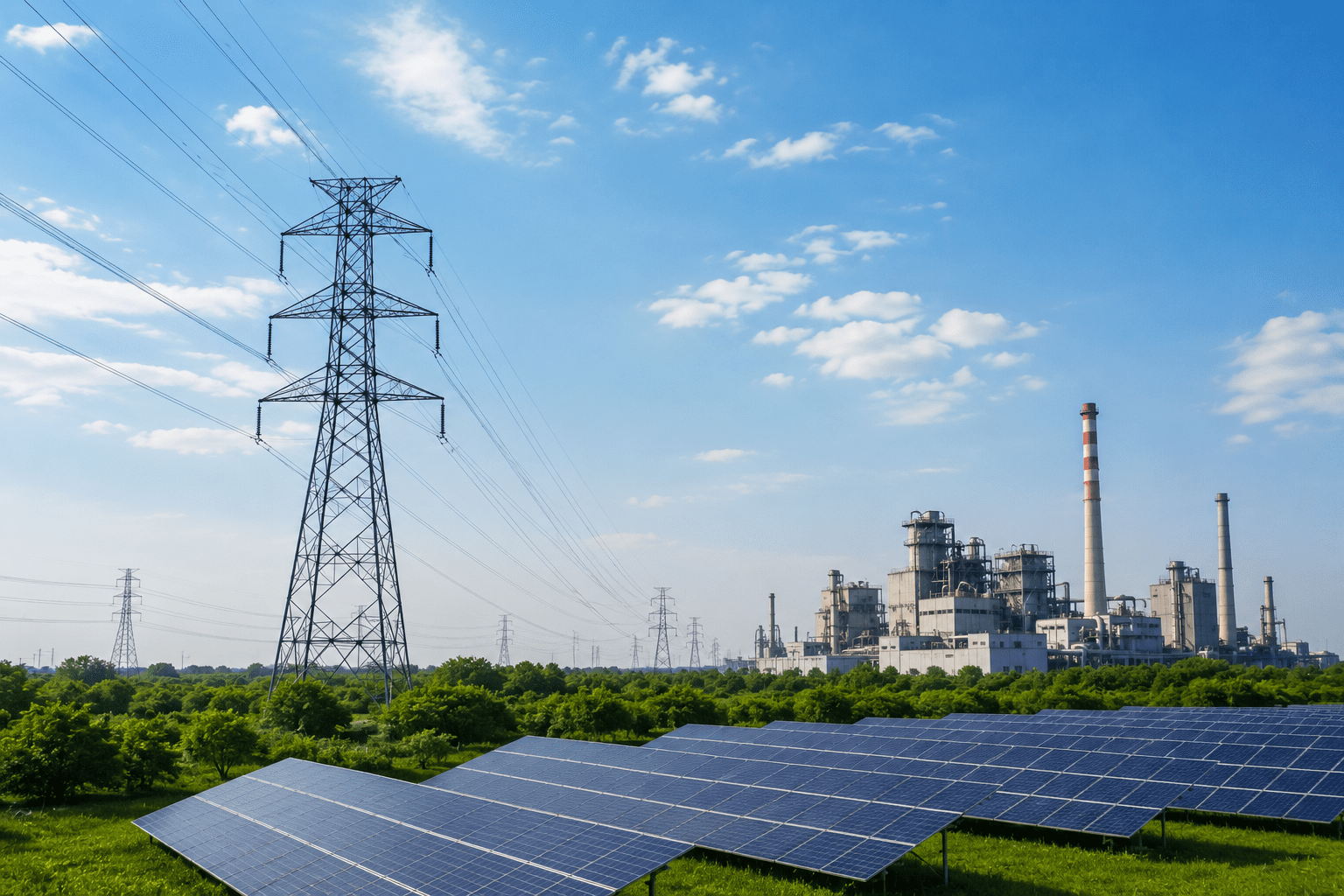
What matters is how the electricity gets from the generator to your facility. And the answer is: through exactly the same grid infrastructure that delivers your DISCOM power today. The national and state transmission networks carry electricity from generators to consumers regardless of which commercial arrangement sits behind that delivery. When you sign an open access agreement with a renewable energy generator, the power that generator produces is fed into the grid, and you draw from the grid at your end — through the same connection, the same meters, the same physical infrastructure you have always used.
Nothing at your facility changes. No panels are installed. No turbines are erected. No additional infrastructure is commissioned. You simply have a different commercial relationship governing the electricity you were always going to consume.
A Comparison That Makes It Immediately Clear
The analogy that most business owners find immediately clarifying is the one to telecommunications or internet services.
When you switch your company’s mobile network from one operator to another, the physical infrastructure — the towers, the cables, the spectrum — doesn’t change. You are simply choosing a different commercial provider to deliver a service through a shared network. You don’t build your own tower when you switch to a better mobile plan.
Open access electricity works on exactly the same principle. The grid is the shared infrastructure — like the mobile network. The generator is your chosen service provider — like your mobile operator. And you, the industrial consumer, are simply exercising your right to choose which provider supplies your electricity through that shared network, at what price, and under what terms.
This is not a new idea. It is a principle that has been embedded in India’s electricity legislation since 2003, when the Electricity Act established the legal basis for open access and created the framework that has been progressively refined and expanded in the two decades since. The right to choose your electricity supplier — long taken for granted in the telecom sector — has existed in the power sector for more than twenty years. The majority of industrial businesses have simply not yet used it.
The Three Ways Open Access Procurement Can Work
There is flexibility in how open access electricity can be structured, and understanding the options helps businesses identify which model suits their specific situation.
Short-term open access arrangements cover procurement periods of up to one month, typically using power exchange platforms where electricity is traded and settled on shorter cycles. This model suits businesses with variable or seasonal consumption patterns that need flexibility rather than long-term commitment.
Medium-term open access covers agreements ranging from one month to twelve months. This offers more price certainty than short-term trading while maintaining the ability to reassess arrangements annually — useful for businesses that are new to open access and want to experience the model before making a longer commitment.
Long-term open access, through multi-year Power Purchase Agreements directly with renewable energy generators, is by far the most widely used model among Indian industrial consumers. Agreements typically run for 15 to 25 years, locking in a fixed tariff for the duration. This is the arrangement that delivers the most significant and sustained financial benefit — price certainty over an extended period while DISCOM tariffs continue their upward trajectory. For any business that consumes substantial electricity and plans to continue doing so, this is almost always the most financially rational option.
Why This Misconception Has Persisted — And What It Costs
The confusion between open access electricity and on-site solar installation is not entirely surprising. When the topic of renewable energy comes up in a business context, the conversation most commonly defaults to rooftop solar — a model that does involve physical installation at the consumer’s premises and that has its own set of considerations around space, structural capacity, upfront investment, and ongoing maintenance.
Open access is a fundamentally different model, but because both are discussed under the umbrella of renewable energy, businesses sometimes conflate them. The result is that industries which do not have the rooftop space, the capital, or the operational tolerance for on-site installation dismiss open access along with it — even though open access has none of those requirements.
The cost of that confusion is real and calculable. Every month that an industrial business pays DISCOM tariffs when it could be paying open access rates — typically 20 to 40 percent lower, even after all applicable charges — is a month of avoidable expense. For a business consuming significant volumes of electricity, that monthly difference compounds into crores over the duration of what would have been a long-term open access agreement. The businesses that have already made the switch have already started accumulating those savings. The ones still operating on a false premise about what open access requires are paying the cost of that misunderstanding every time their electricity bill arrives.
What the Process of Adopting Open Access Actually Involves
Since open access doesn’t require any physical installation at your premises, what does it actually involve? The process is essentially commercial and administrative in nature.
It begins with understanding your current consumption pattern and electricity cost structure — how much you consume, when you consume it, and what you are currently paying. From that baseline, an experienced advisor models the landed cost of open access power for your state and consumption profile, accounting for all applicable charges, to show you clearly what your saving would be.
If the numbers work — and for most industrial consumers above a threshold consumption level, they do — the next stage involves selecting a renewable energy developer, structuring the terms of the power purchase agreement, and navigating the regulatory approvals required in your state for open access procurement. This is where the complexity lives, and it is also where the right advisory partner makes the difference between a process that moves smoothly and one that stalls in unfamiliar bureaucratic terrain.
Once the agreement is live, your electricity continues arriving through the same connection as always. Your DISCOM remains involved for the transmission and distribution services that carry your power to the premises. But the commercial driver of your electricity cost is now the PPA rate you locked in — not whatever revision the tariff regulator announces next April.
The Misconception Is Understandable. Acting on It Isn’t.
If you have dismissed open access in the past because you assumed it would require installing generation equipment your business doesn’t have space or capital for — that was a reasonable conclusion based on incomplete information. It is also one of the most common reasons industrial businesses give for not having explored an option that could save them crores annually.
The information is now clear. Open access does not require installation. It requires a procurement decision — one backed by a well-structured agreement, a competent advisory partner, and the willingness to change a commercial relationship that has never worked in your favour.
At Open Access Energy, we have helped businesses across India work through exactly this process — from the first conversation where we explain how open access actually works, through the numbers that show what it saves, to the agreement that puts those savings in motion. We manage the complexity so that the transition to open access is as straightforward as the concept itself.
Reach out to Open Access Energy today. Let us show you exactly how open access works for your business — and what it would take to start paying significantly less for the electricity you are already consuming.