 openaccessexchange@gmail.com
 Mon - Fri: 9 AM to 8 PM



India's Open Access Renewable Energy Market Guide
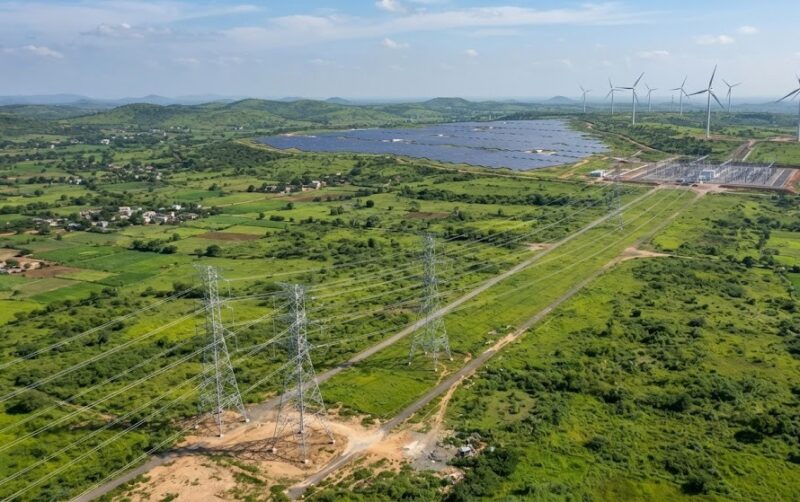
When most people think about India’s clean energy journey, they picture vast solar parks stretching across Rajasthan’s desert landscape, or ambitious government targets announced at international climate summits. It’s a compelling image — and it’s not wrong. But it tells only part of the story.
The more consequential transformation is happening somewhere far less photogenic. It’s happening in the energy procurement meetings of manufacturing companies in Pune. In the boardrooms of industrial estates in Surat. In the CFO reviews of textile mills in Coimbatore and data centres in Bengaluru. It’s happening quietly, practically, and at a pace that is beginning to reshape how industrial India thinks about power — not as an unavoidable cost, but as a strategic lever. buy riding gear online india
At the centre of this shift is a model that has existed in India’s regulatory framework for years but is only now reaching its full potential: Open Access renewable energy.
What Open Access Actually Means for a Business Like Yours
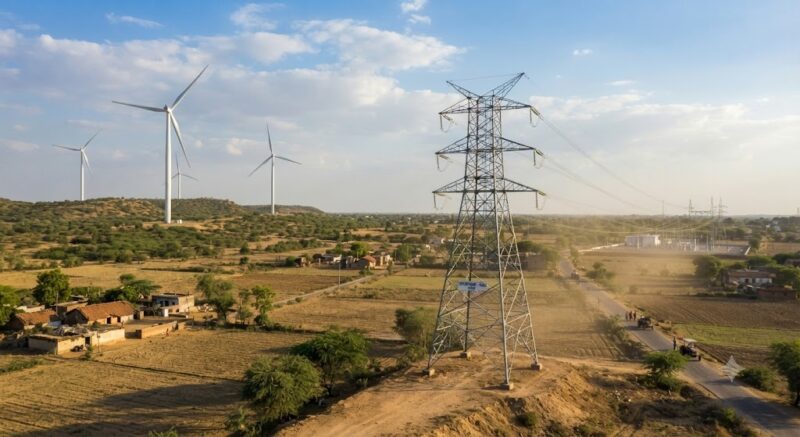
Strip away the policy language and the Open Access model is straightforward. If your business is a large electricity consumer, you are no longer required to buy all your power from your local distribution company at whatever tariff they set. You have the legal right to purchase renewable electricity directly from a generator — a solar or wind power plant — and have it transmitted to your facility through the existing state grid.
The practical effect of this is significant. Instead of absorbing tariff hikes year after year with limited ability to respond, your business can lock in a fixed, long-term power rate through a direct agreement with a renewable energy developer. The electricity itself travels through the same grid infrastructure you’ve always used. What changes is where it comes from and what you pay for it.
For industries in Maharashtra, Gujarat, Tamil Nadu, Karnataka, and Telangana — states where Open Access frameworks have matured considerably — this is no longer a theoretical option. It is a commercially proven model that thousands of industrial consumers are already using to reduce their power costs by 20 to 40 percent while simultaneously cutting their carbon emissions.
Why This Moment Feels Different From Five Years Ago
Open Access as a concept is not new. The legal framework enabling it has existed under India’s Electricity Act for over two decades. So why is adoption accelerating so sharply now?
Several things have converged at the same time. Renewable energy tariffs have fallen dramatically, to the point where solar and wind power sourced through Open Access agreements is now genuinely cheaper than conventional grid supply for most large industrial consumers. State regulators have progressively simplified the approval processes that once made Open Access administratively burdensome. And digital energy management platforms have arrived that give businesses real-time visibility into their consumption, billing, and carbon reporting — removing much of the complexity that used to make the model feel inaccessible.
At the same time, the external pressure on businesses to demonstrate credible progress on sustainability has intensified. Global supply chains, institutional investors, and large corporate buyers are increasingly scrutinising the energy and emissions footprint of their suppliers and partners. For an Indian manufacturer or industrial company with export ambitions or institutional clients, switching to renewable energy through Open Access is no longer just a cost decision. It is a market access decision.
From Niche Initiative to Mainstream Strategy
Not long ago, Open Access renewable energy was something only the most progressive or largest industrial companies in India explored. It required navigating complex regulatory terrain, managing relationships with energy developers, and building internal capability to understand a part of the business that had previously been handled as a simple utility payment.
That picture has changed substantially. The combination of better policy, lower costs, improved technology, and specialist advisory and platform services has brought Open Access firmly into the mainstream of industrial energy strategy. What was once a niche sustainability initiative pursued by a handful of forward-thinking companies is now a standard consideration in the energy planning of businesses across sectors — from auto-ancillaries and pharmaceuticals to logistics, retail, and hospitality.
The businesses driving this adoption are not doing so out of idealism. They are doing it because the numbers work, the regulatory environment supports it, and the competitive consequences of inaction are becoming increasingly clear.
The Decentralised Energy Future India Is Moving Toward
India’s power sector is undergoing a structural transformation that goes well beyond the headline numbers on solar capacity. The country is moving — deliberately and with growing momentum — toward a more flexible, decentralised energy ecosystem where large consumers have genuine choice over their energy source, price, and provider.
Open Access is a critical part of this ecosystem. It allows renewable energy deployment to be driven not just by government policy and public sector investment, but by private industrial demand — which is both faster and more efficient as a mechanism for scaling clean energy across the country. Every factory, warehouse, or commercial facility that transitions to Open Access renewable energy adds to India’s renewable capacity in a way that is directly connected to real economic activity.
For businesses, this means that the decision to adopt Open Access is not just a good one for your own bottom line and sustainability credentials. It is a meaningful contribution to an energy transition that India genuinely needs.
The Window to Act Is Open — But It Won’t Stay That Way Indefinitely
India’s Open Access landscape is favourable right now in ways that may not persist indefinitely. Tariffs are competitive. Regulatory frameworks in key industrial states are supportive. The pool of experienced developers and advisory partners has deepened. And the policy direction from both central and state governments is clearly oriented toward making clean energy more accessible for industrial consumers.
Businesses that establish their Open Access agreements in this environment will lock in rates and structures that will look increasingly advantageous as conventional grid tariffs continue their upward trajectory. Those that delay will find themselves acting under conditions that are likely to be less favourable — and watching their competitors operate at a lower energy cost base in the meantime.
Where Open Access Energy Fits Into This Picture
At Open Access Energy, we have been working at the intersection of industrial energy demand and renewable supply throughout this transition. We understand the regulatory landscape across India’s key industrial states, the commercial dynamics of power purchase agreements, and the operational realities that matter to a business owner making a long-term energy commitment.
We don’t believe in generic solutions. Every business we work with has a different consumption profile, a different risk appetite, and a different set of sustainability commitments. We build Open Access strategies that reflect those specifics — and we support our clients through every stage of the process, from initial feasibility to live energy management.
If you’re running a business that consumes significant power and you haven’t seriously explored what Open Access renewable energy could do for your cost base and your sustainability story — now is the right time to start that conversation. Spotify Downloader
Reach out to Open Access Energy today. The transformation of industrial India’s energy future is already underway. The only question is whether your business is part of it.