 openaccessexchange@gmail.com
 Mon - Fri: 9 AM to 8 PM


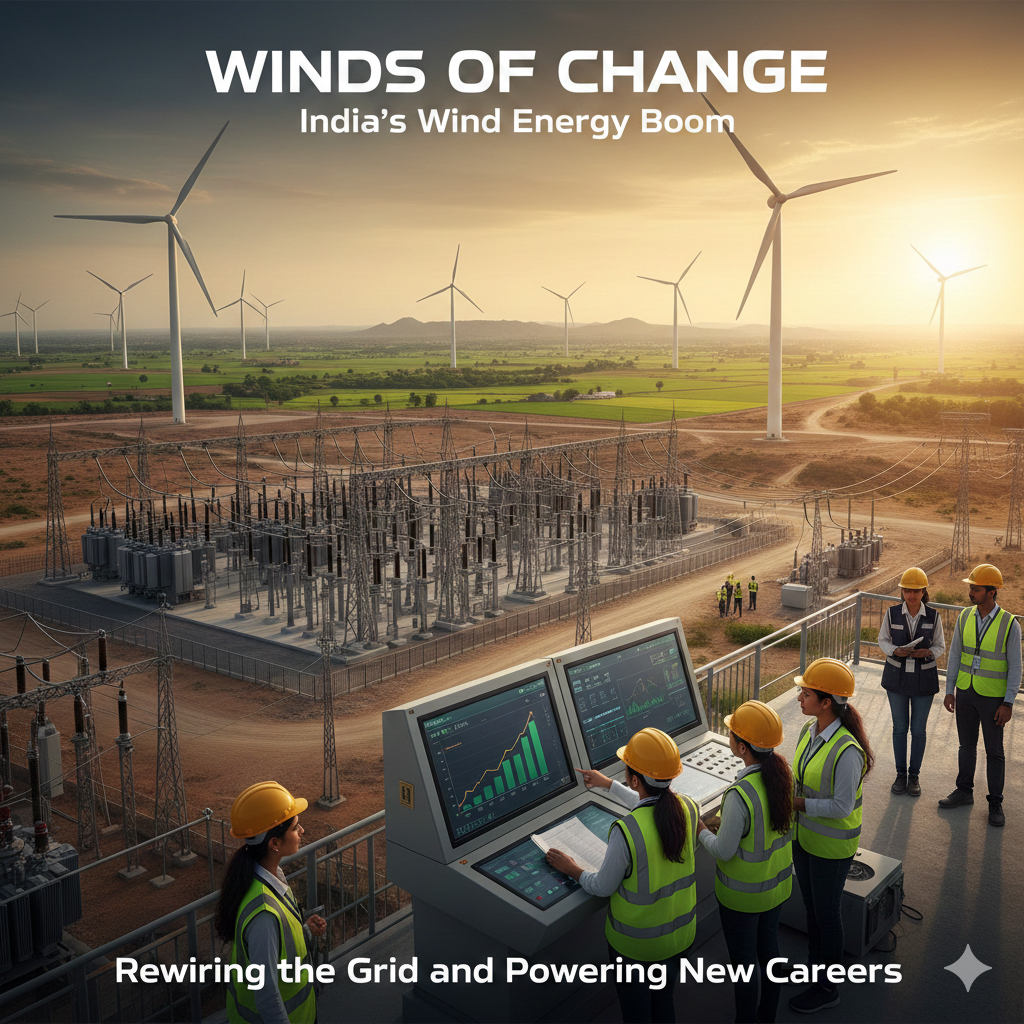
Winds of Change: How India's Wind Energy Boom Is Rewiring the Grid and Powering New Careers
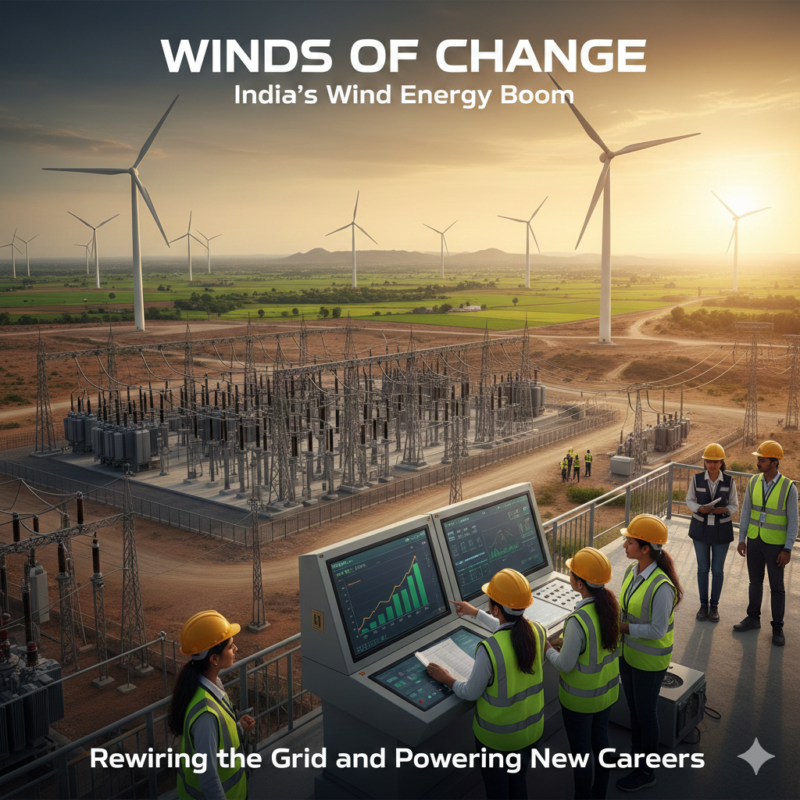
Across the sun-scorched plains of Tamil Nadu and the rugged coastlines of Gujarat, something remarkable is happening. Hundreds of towering white turbines are spinning silently, feeding electricity into a national grid that is undergoing its most dramatic transformation in decades. India’s wind energy revolution is no longer a distant promise — it is reshaping how the country powers itself and who gets to do that work.
A Grid Under Reinvention
India’s power grid was built for a different era — one defined by coal plants that generated electricity in predictable, steady streams. Wind energy changes that equation entirely. Unlike thermal power, wind generation fluctuates with the weather, peaking at certain hours and dropping at others. Integrating large-scale wind capacity into the grid has forced engineers, planners, and regulators to rethink how electricity is transmitted, stored, and balanced across the country’s vast geography.
The government’s target of 140 GW of wind capacity by 2030 has accelerated the deployment of smart grid technologies, high-voltage direct current (HVDC) transmission lines, and advanced energy storage systems. New interstate transmission corridors are being constructed to carry wind-generated power from energy-rich states like Rajasthan and Andhra Pradesh to industrial demand centers in Maharashtra and Karnataka. The grid, once a passive highway for power, is becoming an intelligent, responsive network.
Jobs the Wind Is Blowing In
Perhaps the most underappreciated dimension of this transition is its impact on employment. The wind energy sector in India is becoming a meaningful source of livelihood across the skills spectrum — from engineers designing next-generation turbines to welders fabricating tower components in factory towns like Coimbatore and Surat.
According to industry estimates, India’s renewable energy sector — with wind as a cornerstone — is expected to support over 3.4 million jobs by 2030. These aren’t all high-tech roles. Installation crews, site surveyors, logistics coordinators, and maintenance technicians are in growing demand, particularly in rural regions where wind farms are being developed. For many local communities, the arrival of a wind project means steady, formal employment where none existed before.
At the higher end, there is surging demand for power systems engineers, data analysts managing turbine performance software, and grid integration specialists capable of working across legacy and modern infrastructure. Indian universities and technical institutes are responding with dedicated renewable energy programs, though the pace of curriculum updates still lags behind industry need.
Challenges on the Horizon
The expansion is not without friction. Land acquisition disputes, grid curtailment in states with insufficient transmission infrastructure, and financing bottlenecks continue to slow project timelines. The workforce transition also presents challenges — workers displaced from coal-dependent industries require retraining, and there is as yet no comprehensive national policy to manage that shift equitably.
The Bigger Picture
India’s wind energy story is ultimately about more than kilowatts and capacity targets. It is about a country of 1.4 billion people betting on a cleaner, more distributed model of energy production — one where electricity can be generated in a coastal village and consumed in a distant city, and where the engineers, welders, and technicians making it happen are increasingly Indian.