 openaccessexchange@gmail.com
 Mon - Fri: 9 AM to 8 PM


From Subsidies to Sovereignty: Maharashtra Targets 2.5% Annual Tariff Reduction Through Residential Solar
 April 4, 2026
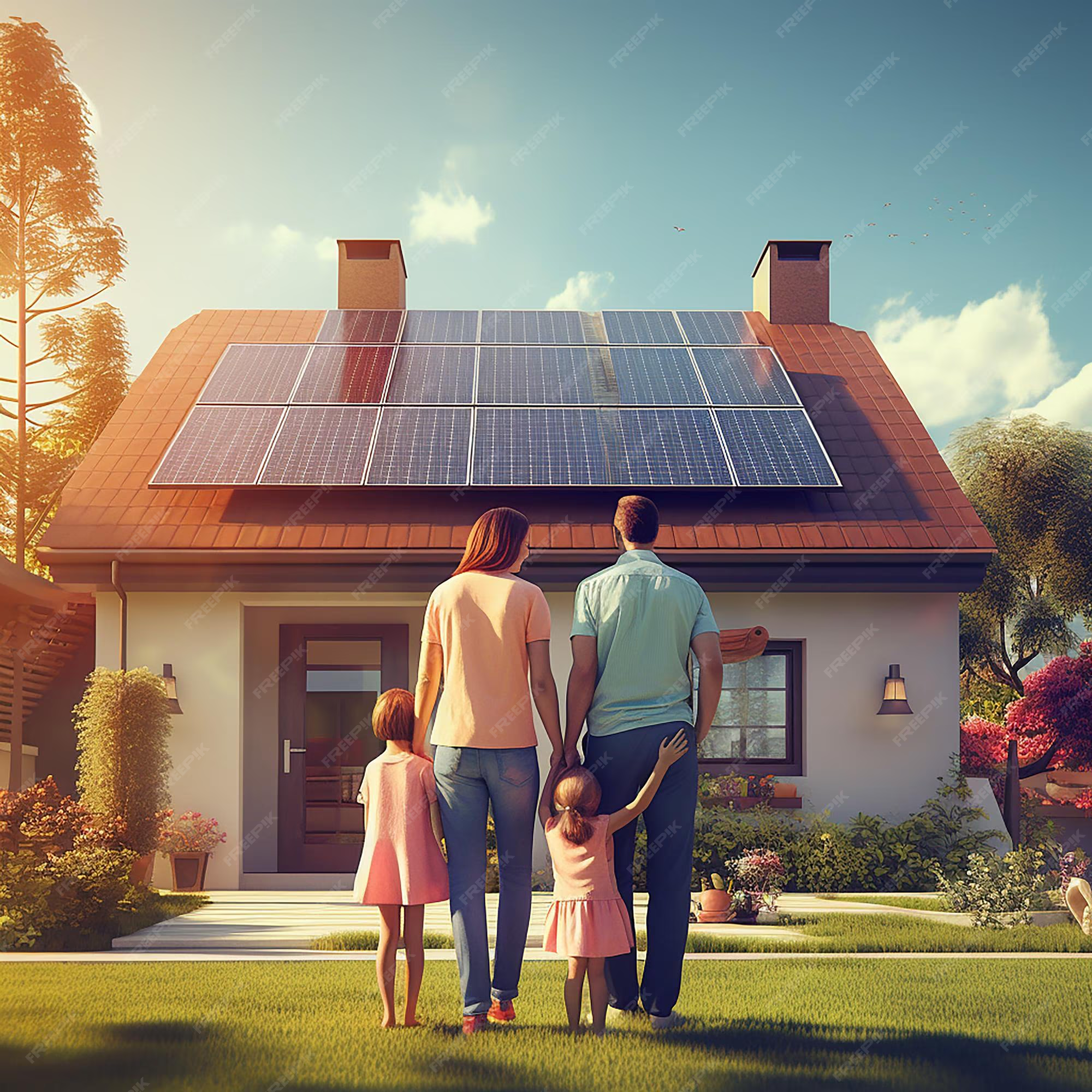
The Maharashtra government is embarking on one of the most ambitious residential solar programs in India’s history, with a long-term goal of providing free electricity to nearly 1.5 crore small consumers over the next five years. The strategy centers on a massive scale-up of rooftop solar adoption, primarily through the expansion of the state’s SMART (Swayampurn Maharashtra Awasiya Rooftop) scheme. This initiative specifically targets households consuming up to 100 units per month, ensuring that the benefits of the energy transition reach those in the most economically vulnerable sections, including those below the poverty line (BPL).
To make this transition financially viable for low-income families, the state has layered its own subsidies on top of the central government’s PM-Surya Ghar: Muft Bijli Yojana. Under the SMART scheme, BPL consumers can receive up to ₹17,500 in state support, while Scheduled Caste and Scheduled Tribe households are eligible for ₹15,000. When combined with the ₹30,000 central subsidy, the upfront cost for a small-scale solar system is virtually eliminated for many. The state has already allocated ₹655 crore for the current financial year, with a target of covering five lakh households by the end of 2026—a goal officials expect to meet ahead of schedule as installations currently average 1,200 systems per day.
What makes this roadmap particularly significant is the shift in fiscal strategy. Rather than continuing a cycle of increasing subsidies for grid power, the Energy Department aims to reduce electricity tariffs by 2.5% annually. By turning consumers into “prosumers” who generate their own power, the state expects to lower its overall subsidy burden and reduce dependence on conventional coal-fired plants. If successful, this model could serve as a national blueprint for using renewable technology to solve the twin challenges of energy poverty and fiscal sustainability simultaneously.