 openaccessexchange@gmail.com
 Mon - Fri: 9 AM to 8 PM


 March 9, 2026
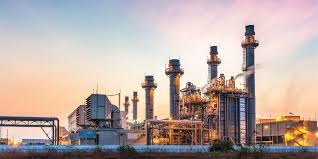
 The Rajasthan Electricity Regulatory Commission (RERC) has approved the tariff for 500 MW / 2,000 MWh (2 GWh) standalone battery energy storage systems (BESS) in the state. The tariff was discovered through a competitive bidding process conducted by Rajasthan Rajya Vidyut Utpadan Nigam Limited (RVUNL).
The regulator adopted a tariff of ₹285,000 per MW per month for the storage capacity. These projects will provide four-hour battery storage, meaning the system can store electricity and discharge it continuously for four hours when needed.
The projects were awarded through a tariff-based global competitive bidding process, which attracted strong participation. A total of 27 bidders participated, and six developers were selected for the project capacity. The commission noted that the competitive bidding ensured fair price discovery.
The state government had earlier appointed RVUNL as the implementing agency for battery storage deployment. The Ministry of Power allocated 2,000 MWh of battery storage capacity to Rajasthan under the national viability gap funding (VGF) program. The program provides financial support of about ₹1.8 million per MWh to encourage the deployment of energy storage systems.
According to the guidelines, these battery storage projects must:
-
Have a minimum storage duration of two hours
-
Be commissioned within 18 months after signing the battery energy storage purchase agreement (BESPA)
-
Operate under contracts lasting 12–15 years.
The commission compared the discovered tariff with similar projects across India and noted that the Rajasthan tariff is among the lowest for standalone four-hour battery storage systems, indicating strong competition in the auction process.
Battery energy storage systems are becoming increasingly important as India expands solar and wind capacity. Storage projects help balance intermittent renewable generation, improve grid stability, and supply electricity during peak demand periods, making them a critical component of the country’s clean energy transition.
If you want, I can also compile all the 20+ articles you sent into one single “Indian Renewable Energy News Report (Feb–Mar 2026)” with categorized sections (policy, storage, solar, EV, investments, grid, companies) so it becomes easier for your assignment or research.