 openaccessexchange@gmail.com
 Mon - Fri: 9 AM to 8 PM


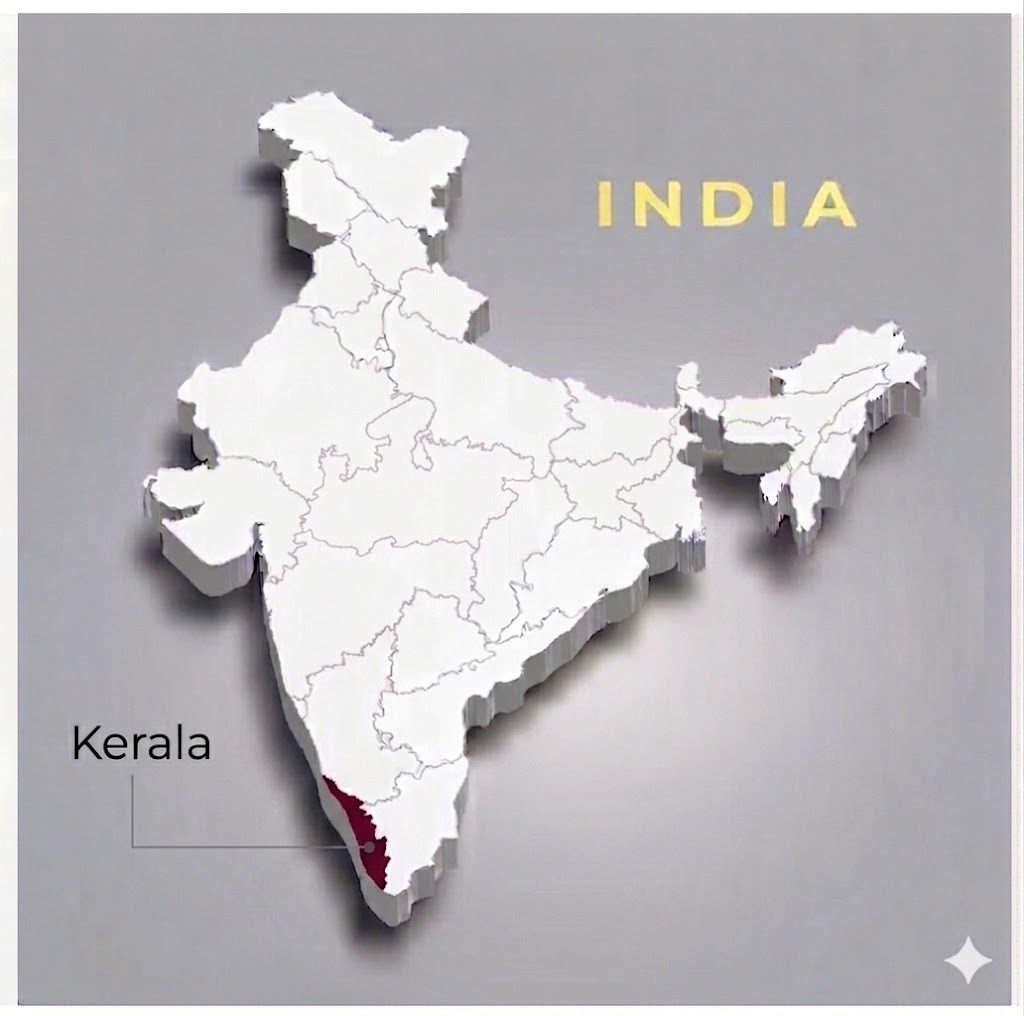
Kerala Open Access Regulatory Policies
Open Access and renewable energy procurement in Kerala are regulated by the Kerala State Electricity Regulatory Commission (KSERC) under a combination of state regulations, tariff orders, renewable energy frameworks, and central government policies.
The state’s electricity sector is governed through the KSERC Renewable Energy and Related Matters Regulations, the KSERC Multi-Year Tariff Order effective from 5 December 2024 to 31 March 2027, the KSERC Connectivity and Open Access Regulations, the Kerala Electricity Supply Code, 2014 (as amended), the Green Energy Open Access Rules, 2022, and the Electricity Act, 2003.
Kerala State Electricity Board Limited (KSEB Ltd.) serves as the state’s sole electricity distribution licensee and is responsible for electricity distribution across all districts of Kerala.
The KSERC Renewable Energy framework provides comprehensive provisions covering rooftop solar, energy storage systems, net metering, virtual power plants, peer-to-peer energy trading, and emerging distributed energy technologies.
Green Energy Open Access (GEOA) is available to consumers with a minimum contract demand of 100 kW in accordance with the Green Energy Open Access Rules, 2022.
Conventional Open Access is generally available to eligible High Tension (HT) and Extra High Tension (EHT) consumers with substantial electricity demand.
The state supports multiple renewable energy procurement structures, including Captive, Group Captive, and Third-Party Open Access models.
Kerala has established a diverse set of renewable energy consumption mechanisms to accommodate different consumer categories and project sizes.
Net Metering is available to domestic, agricultural, commercial, and industrial consumers for rooftop solar systems beginning from 1 kW capacity.
Under current regulations, Net Metering systems are generally permitted up to 3 kW capacity, with installations up to 5 kW allowed when integrated with approved battery energy storage systems.
Net Billing is available for renewable energy systems ranging from 1 kW to 500 kW, subject to the consumer’s connected load and applicable regulatory limits.
Gross Metering is permitted for projects up to 3 MW, allowing consumers to export all generated electricity to the grid and receive compensation at regulated tariff rates.
Banking of renewable energy is permitted under Kerala’s renewable energy regulations.
Under the Net Metering framework, surplus energy exported to the grid may be carried forward into subsequent monthly billing periods.
Kerala follows a monthly banking structure rather than an annual banking mechanism.
Banked energy generally does not carry forward beyond the applicable settlement period, making the banking framework less flexible than those available in states offering annual settlements.
A banking charge of 5% is applicable on banked energy.
This means that for every 100 units of energy banked with the grid, consumers are generally eligible to withdraw approximately 95 units after accounting for banking losses.
Any surplus energy remaining at the end of the settlement year is compensated by KSEB at the Average Power Purchase Cost (APPC) determined by the regulator.
The current APPC-based settlement rate for annual surplus energy is approximately ₹3.08 per kWh, payable by KSEB within the prescribed settlement period.
Kerala provides significant benefits for prosumers who generate and consume electricity at the same premises.
Energy generated and consumed within the same premises is generally exempt from transmission charges, wheeling charges, and distribution loss adjustments, improving the economics of rooftop solar investments.
Applications for rooftop solar systems and Net Metering installations are processed through KSEB’s online portal.
The application and approval process is largely digital and structured.
Technical feasibility assessments are generally completed within fifteen days of application submission.
Registration is typically completed within three days following technical feasibility approval.
The overall process from connectivity approval to project commissioning is generally expected to be completed within approximately 135 days.
Recent regulatory revisions have significantly reduced registration fees for renewable energy projects.
Registration charges have been reduced from ₹1,000 per kW to approximately ₹300 per kW under the updated regulatory framework.
For Open Access consumers, approvals are required from KSEB, KSERC, and other system operators depending on project structure and network usage requirements.
Scheduling and energy accounting functions are managed through the State Load Dispatch Centre (SLDC).
Transmission connectivity approvals are coordinated through the transmission wing of Kerala’s electricity network infrastructure.
Open Access consumers are subject to various network-related charges depending on project type and procurement model.
Transmission charges and wheeling charges are applicable under KSERC tariff orders.
However, these charges are generally waived for prosumers consuming energy at the same premises where generation occurs.
Cross Subsidy Surcharge (CSS) is applicable for Third-Party Open Access transactions, although certain concessions may be available for Green Energy Open Access consumers.
Additional Surcharge may also apply in accordance with KSERC tariff determinations.
Banking charges are levied at 5% of banked energy.
Grid Support Charges are applicable for Virtual Net Metering and Group Net Metering arrangements, with domestic and agricultural consumers receiving certain exemptions.
Standby power supply is available to eligible consumers and is charged according to the applicable HT or EHT tariff category.
Deviation Settlement Mechanism (DSM), scheduling, and SLDC-related charges apply where required under applicable regulations.
Consumers operating under Net Billing arrangements receive compensation based on approved feed-in tariffs.
Current feed-in tariffs are approximately ₹2.79 per kWh for solar energy and ₹3.82 per kWh for wind energy.
Under Gross Metering arrangements, compensation rates are approximately ₹3.48 per kWh for solar generation and ₹4.78 per kWh for wind generation.
Kerala has established detailed technical standards for renewable energy integration and grid connectivity.
The cumulative capacity of rooftop solar installations connected to a distribution transformer is generally restricted to 90% of transformer capacity.
Solar capacity connected to an individual transformer phase is typically limited to 30% of the available phase capacity.
Single-phase inverters are generally restricted to a maximum capacity of 3 kW.
Advanced metering requirements continue to evolve as renewable energy penetration increases.
Smart meters are expected to become mandatory for renewable energy systems between 100 kW and 1 MW from April 2027 onwards.
Projects with capacities of 1 MW and above are generally required to install Availability Based Tariff (ABT) compliant special energy meters.
Independent Power Producers (IPPs), captive generators, and other developers are generally responsible for the cost of any network infrastructure upgrades required to facilitate grid connectivity.
Kerala presents unique opportunities and challenges for renewable energy development.
The state has some of the highest retail electricity tariffs in South India, creating strong financial incentives for consumers to adopt rooftop solar systems and renewable energy procurement strategies.
Commercial establishments, residential consumers, and medium-sized industries can often achieve attractive savings through renewable energy investments.
The state’s information technology sector represents a particularly promising market for Open Access and renewable energy procurement.
Major technology hubs such as Technopark in Thiruvananthapuram and Infopark in Kochi host large electricity consumers with growing sustainability commitments and renewable energy procurement objectives.
Industrial sectors including rubber processing, cashew manufacturing, seafood processing, tile manufacturing, and food processing also present significant opportunities for renewable energy adoption.
Kerala’s tourism and hospitality industry represents another major growth segment.
Hotels, resorts, wellness centers, and tourism infrastructure increasingly seek renewable energy solutions to strengthen sustainability credentials and reduce operating costs.
The state’s renewable energy regulations are among the most progressive in India and include provisions that support future technologies such as Virtual Power Plants (VPPs), Vehicle-to-Grid (V2G) integration, distributed energy resources, and peer-to-peer electricity trading.
Despite these opportunities, Kerala faces several structural challenges.
Solar irradiation levels are generally lower than those available in states such as Rajasthan, Gujarat, Karnataka, and Madhya Pradesh.
Extended monsoon periods lasting approximately four to five months each year can significantly reduce solar generation and lower project capacity utilization factors.
Ground-mounted solar development is constrained by limited land availability, dense population centers, forest cover, and challenging terrain.
As a result, rooftop solar systems and Open Access procurement from projects located outside the state often represent the most practical renewable energy options.
Kerala’s electricity sector remains highly centralized under KSEB, and Open Access approvals for large industrial consumers may occasionally require longer processing periods compared to more competitive distribution environments.
High electricity duty and other tariff components can also increase the complexity of evaluating total electricity procurement costs.
Kerala is heavily dependent on hydroelectric generation for a significant portion of its electricity supply.
Hydropower availability varies seasonally, creating opportunities for solar energy and other renewable technologies to improve energy security and diversify the state’s generation portfolio.
The Kerala State Electricity Regulatory Commission (KSERC) continues to strengthen the state’s renewable energy ecosystem through progressive regulations and market-oriented reforms.
With high electricity tariffs, strong policy support, advanced renewable energy regulations, growing sustainability commitments, and increasing adoption of distributed energy resources, Kerala is expected to remain one of India’s most promising markets for rooftop solar deployment, renewable energy innovation, and Green Energy Open Access participation.