 openaccessexchange@gmail.com
 Mon - Fri: 9 AM to 8 PM


Agastya Green Energy Announces ₹7,800 Crore Investment in 12 GW Solar Ingot and Wafer Manufacturing
 August 18, 2026
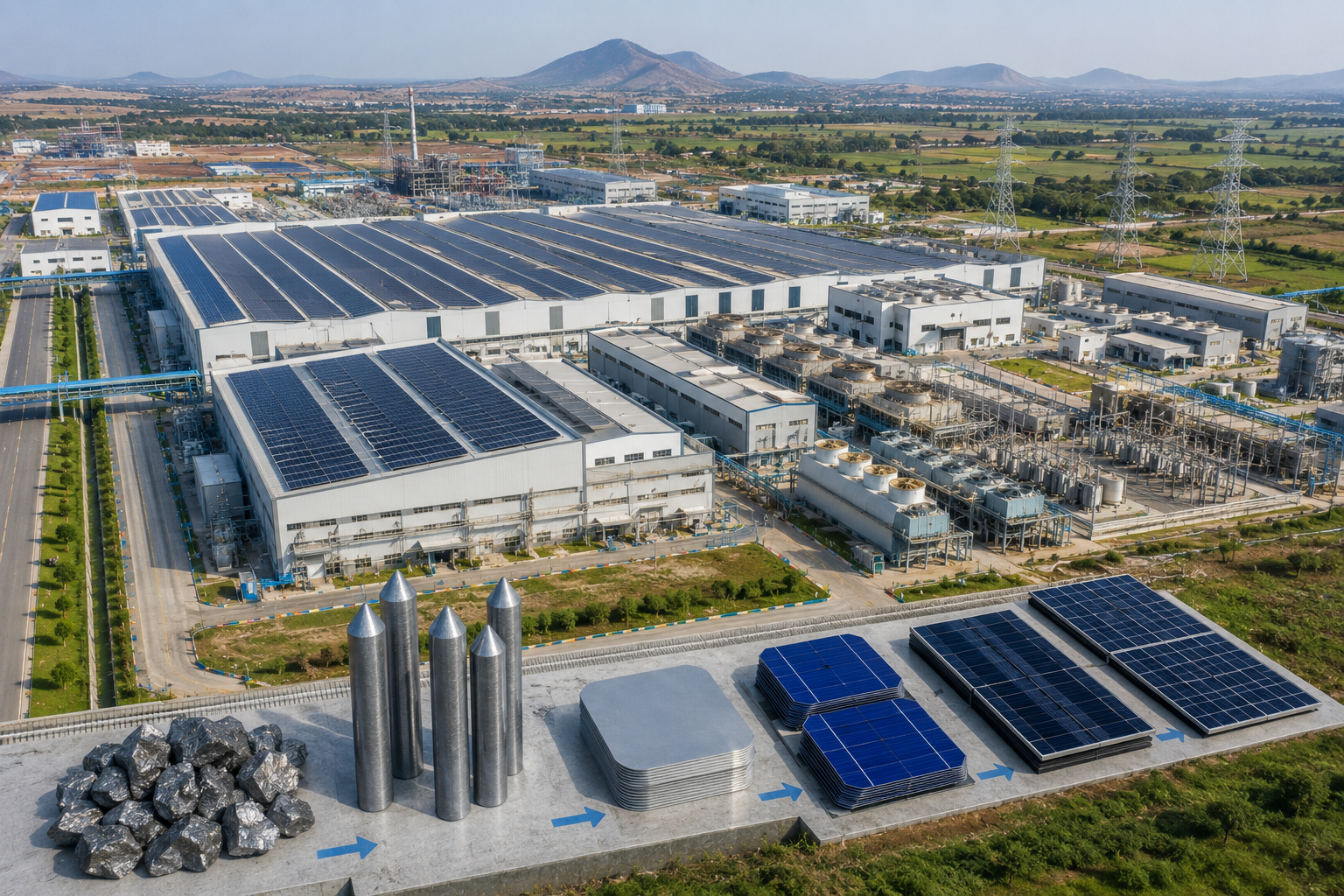
India’s solar manufacturing ecosystem is set for another major expansion, with Agastya Green Energy planning to invest approximately ₹78 billion (₹7,800 crore) to establish 12 GW each of solar ingot and wafer manufacturing capacity in Andhra Pradesh.
The proposed facility will be located at the Orvakal Industrial Area in Kurnool and will expand Agastya Green Energy’s presence further upstream in the solar manufacturing value chain.
The company already has capabilities in solar cell and module manufacturing, and the new ingot and wafer capacity is expected to integrate these operations into a more comprehensive domestic manufacturing ecosystem.
Solar ingots and wafers are critical components in the production of photovoltaic cells. By adding these upstream manufacturing capabilities, Agastya Green Energy aims to strengthen integration across the solar supply chain.
According to the company, the expansion is expected to create synergies across solar manufacturing, independent power production and engineering, procurement and construction (EPC) activities.
The development comes at a time when India is placing increasing emphasis on domestic manufacturing and reducing dependence on imported solar components.
The proposed investment also comes against the backdrop of India’s plans to extend the Approved List of Models and Manufacturers (ALMM) framework further upstream.
The government has proposed requirements for India-made solar ingots and wafers, with the framework expected to take effect from June 1, 2028.
Under the proposed structure, solar projects covered by ALMM would need to source modules from approved manufacturers, while the modules would need to use approved domestic cells and, in turn, wafers meeting the applicable requirements.
This could significantly reshape India’s solar supply chain by encouraging greater domestic value addition from raw materials through finished modules.
While the policy direction is aimed at strengthening domestic manufacturing, the industry faces a significant capacity challenge.
The proposed initial wafer list would require at least three independent manufacturers with a combined capacity of 15 GW, with each manufacturer also required to have corresponding ingot manufacturing capacity.
This creates a strong incentive for manufacturers to develop integrated upstream capabilities before the proposed compliance deadline.
Agastya Green Energy’s planned investment highlights the scale of India’s ambitions for domestic solar manufacturing.
A 12 GW ingot and 12 GW wafer manufacturing facility could contribute significantly to the country’s upstream solar ecosystem while supporting the broader expansion of domestic cell and module production.
The investment also reflects a broader industry shift: India is moving from simply assembling solar modules toward building a more integrated manufacturing value chain.
As more domestic capacity comes online, manufacturers, developers and EPC companies could benefit from a more diversified local supply chain.
The expansion is significant not only for solar manufacturing but also for India’s broader clean-energy transition.
As solar installations continue to grow, reliable access to domestically manufactured components will become increasingly important for project developers.
The development of integrated ingot, wafer, cell and module manufacturing could help India strengthen supply-chain resilience, support domestic value addition and create new industrial opportunities.
Agastya Green Energy’s planned ₹7,800 crore investment is therefore another indication that India’s solar sector is entering a deeper manufacturing phase — one where the focus is shifting from solar deployment alone to building the complete ecosystem behind it.