 openaccessexchange@gmail.com
 Mon - Fri: 9 AM to 8 PM


NLC India Wins Two Critical Mineral Blocks in Telangana, Boosting India's Mineral Security
 September 1, 2026
India’s energy transition is creating demand for more than solar panels, wind turbines and batteries.
It is also creating demand for the critical minerals and materials needed to build the technologies behind the transition.
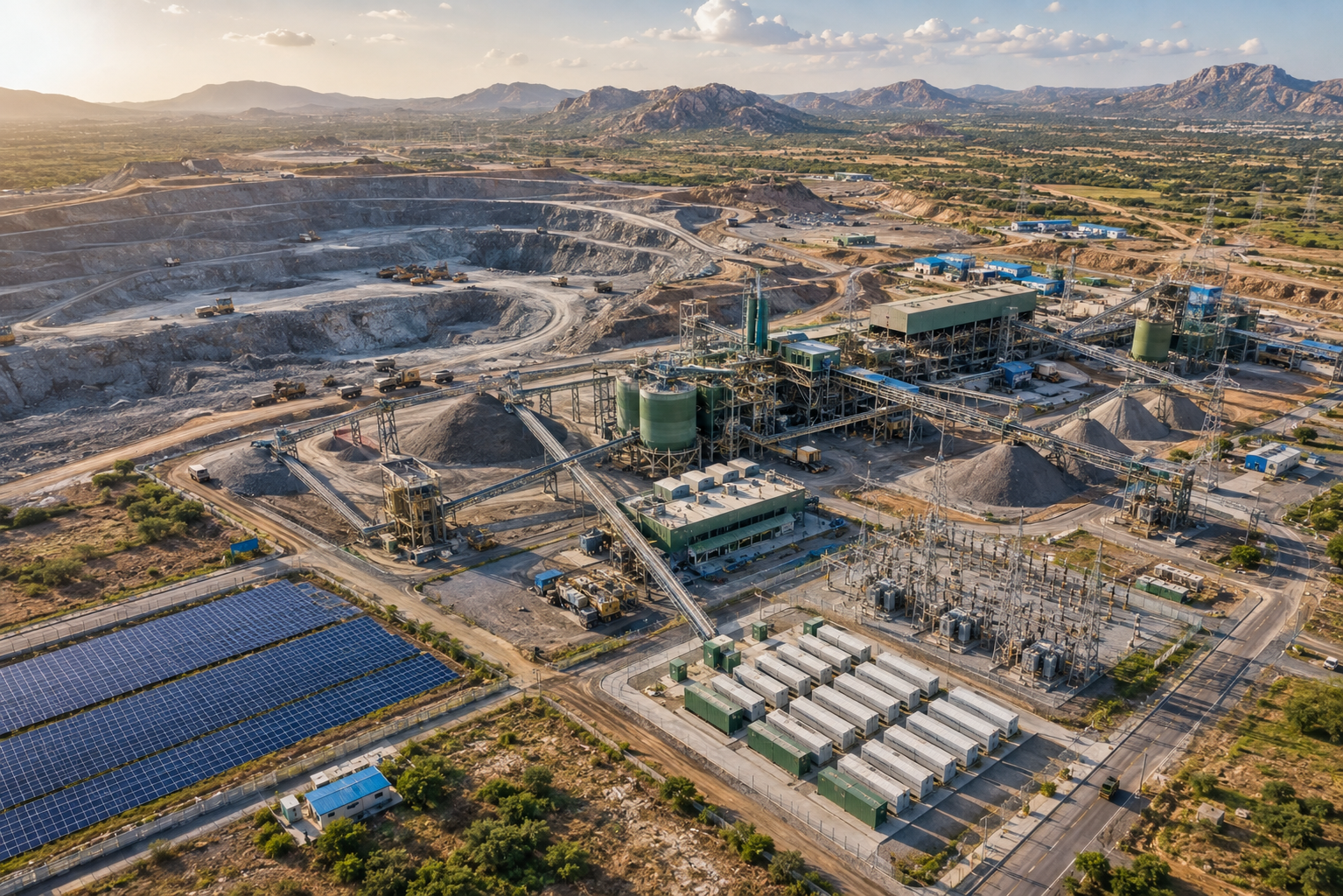
In a significant development, state-owned NLC India Limited has received Letters of Intent from the Government of Telangana for Composite Licences covering two critical mineral blocks in Sangareddy district: the Govindpur Vanadium, Titanium & Aluminous Laterite Block and the Parvathapur Vanadium, Titanium & Aluminous Laterite Block.
NLC India had emerged as the preferred bidder for the two blocks through the 7th Tranche of the Critical and Strategic Mineral auction conducted by the Ministry of Mines, Government of India.
The global clean-energy transition is increasing demand for minerals used across renewable-energy, storage, electronics and advanced industrial technologies.
Vanadium, in particular, has attracted attention because of its potential role in vanadium redox flow batteries, which can be used for long-duration energy storage.
Titanium also has applications across a range of industrial and advanced-material sectors.
For India, developing domestic sources of such resources can help strengthen supply-chain resilience and reduce dependence on imported raw materials.
The development also represents a broader evolution in NLC India’s business strategy.
Historically associated with lignite mining and power generation, the company is increasingly expanding its presence across new areas of the energy value chain, including renewable energy and critical minerals.
This diversification reflects a wider shift taking place across India’s traditional energy companies.
The energy transition is creating opportunities not only in electricity generation, but also in minerals, manufacturing, storage, technology and infrastructure.
The Government of India has been accelerating efforts to establish a stronger domestic critical-mineral ecosystem.
The Ministry of Mines said in June 2026 that the completion of recent auction rounds had taken the number of successfully auctioned critical and strategic mineral blocks to 56. The 7th tranche also expanded critical-mineral auctions into Telangana, Gujarat and Uttarakhand.
The objective is broader than simply finding new mineral deposits.
India wants to build a more resilient supply chain covering exploration, extraction, processing and downstream applications.
There is an important connection between critical minerals and renewable energy.
Solar modules, batteries, electric vehicles, transmission infrastructure and other clean-energy technologies depend on increasingly complex global material supply chains.
This means India’s energy security is gradually becoming linked with its mineral security.
Securing domestic resources can potentially provide greater resilience as demand for clean-energy technologies increases.
For NLC India, the Telangana blocks provide an opportunity to develop capabilities beyond its traditional mining and power businesses.
The company will now have to progress through exploration, resource assessment, technical evaluation and subsequent development stages before any commercial production can be considered.
But the strategic significance is already clear.
The future energy company may not simply be the company that produces electricity. It may also be the company that helps secure the materials needed to produce that electricity.
NLC India’s entry into critical minerals illustrates how India’s energy ecosystem is becoming increasingly interconnected.The next phase of India’s energy security will be built not only on electrons, but also on the minerals and technologies that make those electrons possible.