 openaccessexchange@gmail.com
 Mon - Fri: 9 AM to 8 PM


Juniper Green Energy Completes 75 MW Hybrid Project, Reaches 2,604 MWp Capacity
 September 10, 2026
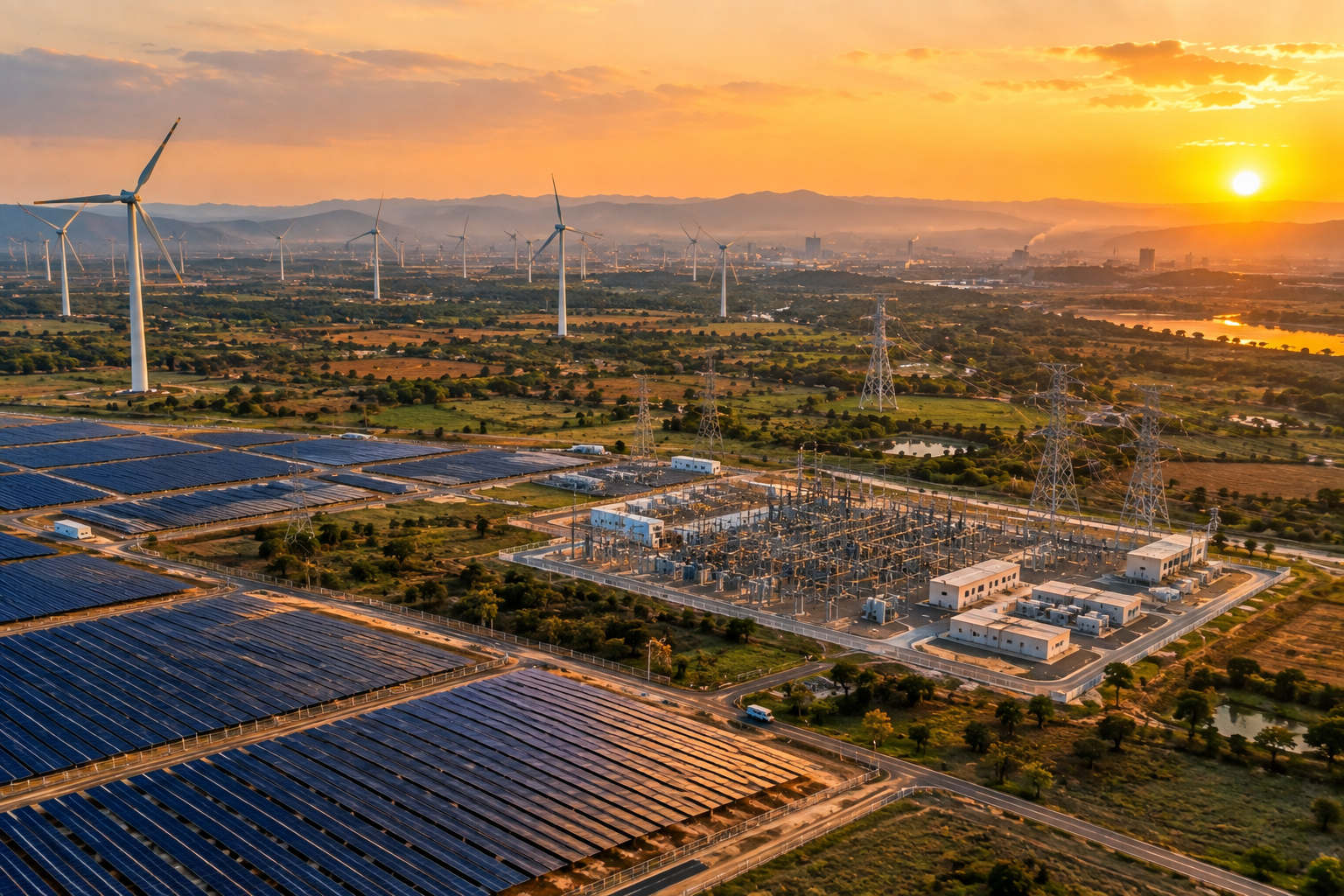
India’s renewable-energy sector is increasingly moving toward integrated power-generation models that combine solar, wind and energy storage. The latest commissioning milestone from Juniper Green Energy highlights this transition, as the company has fully commissioned a 75 MW wind-solar hybrid project in Maharashtra.
The final 10 MW of wind capacity was commissioned on September 9, 2026, completing the project through Juniper Green Spark Ten Private Limited, a wholly owned subsidiary of Juniper Green Energy. The commissioning was witnessed and confirmed by officials from Maharashtra State Electricity Distribution Company Limited (MSEDCL).
Following the commissioning, Juniper Green Energy’s aggregate operational capacity has increased to approximately 2,604 MWp, while its operational BESS portfolio remains around 500 MWh.
The project combines solar and wind generation within a single hybrid renewable-energy configuration.
The final 10 MW wind component was the last part required to fully commission the 75 MW project. This approach allows different renewable resources to complement each other across different periods of the day and weather conditions.
Juniper had previously commissioned the solar components of the project, with earlier reporting showing a 59 MWp solar component commissioned in Wardha in June 2025.
The completion of the remaining wind capacity now brings the entire hybrid project into operation.
The latest commissioning takes Juniper Green Energy and its subsidiaries to approximately 2,604 MWp of operational renewable capacity.
This is significant in the context of India’s rapidly expanding independent power producer market, where developers are increasingly building portfolios across multiple technologies rather than relying exclusively on conventional standalone solar projects.
Juniper’s portfolio includes solar, wind, wind-solar hybrid projects and battery energy storage systems.
Solar and wind have different generation profiles.
Solar generation is concentrated during daylight hours, while wind generation can vary according to seasonal and local wind conditions.
Combining the two can create a more balanced generation profile than relying on either technology independently.
This becomes particularly important as India’s electricity system absorbs increasing volumes of variable renewable generation.
Hybrid projects can help developers optimise land, transmission infrastructure and generation assets while potentially improving the utilisation profile of renewable power.
Juniper Green Energy also has approximately 500 MWh of operational BESS capacity, according to the latest disclosure.
The combination of renewable generation and storage is becoming increasingly important as India seeks to move beyond simply adding renewable capacity toward providing more flexible and dependable clean electricity.
Battery storage can help shift electricity from periods of high renewable generation to periods of greater demand. It can also support grid balancing and reduce the impact of short-term variability.
However, the newly completed 75 MW hybrid project itself should not be described as a 75 MW-plus-BESS project unless the source specifically establishes that the BESS is physically associated with this project.
Maharashtra is emerging as an important market for utility-scale renewable-energy development because of its large electricity demand, industrial base and significant renewable-energy potential.
The involvement of MSEDCL in the commissioning of the project also underlines the importance of state distribution utilities in converting renewable capacity into contracted electricity supply.
For renewable developers, long-term power-purchase arrangements and successful grid integration remain important factors in translating project development pipelines into operating assets.
Juniper’s latest milestone reflects a broader change in India’s renewable-energy market.
The first phase of India’s renewable expansion was heavily focused on adding large volumes of solar and wind capacity.
The next phase is increasingly about how different renewable technologies can work together.
Wind-solar hybrids, firm and dispatchable renewable energy, battery storage and transmission infrastructure are becoming important components of this evolution.
This shift is particularly relevant as distribution companies and large electricity consumers increasingly seek renewable power that can provide greater reliability and a more predictable supply profile.
The completion of the Maharashtra hybrid project comes at a time when India’s renewable sector is increasingly exploring combinations of solar, wind and storage.
Juniper’s own portfolio illustrates this broader diversification, with the company maintaining dedicated businesses across solar, wind, hybrid renewable energy and FDRE/BESS.
The trend points toward a future in which renewable-energy companies are not simply developers of individual generation assets but increasingly become integrated clean-power platforms.
Juniper Green Energy’s completion of the 75 MW wind-solar hybrid project in Maharashtra marks another step in India’s transition toward more integrated renewable-energy systems.
With the final 10 MW wind component now commissioned, the company’s aggregate operational capacity has reached approximately 2,604 MWp, supported by around 500 MWh of operational BESS capacity.
The milestone also highlights the growing importance of combining different renewable technologies with storage and grid infrastructure.
As India’s clean-energy capacity continues to expand, the competitive advantage may increasingly come not simply from owning more megawatts, but from developing more flexible, diversified and better-integrated renewable-energy portfolios.