 openaccessexchange@gmail.com
 Mon - Fri: 9 AM to 8 PM


Telangana Bets on Floating Solar as Power Demand Surges
 September 11, 2026
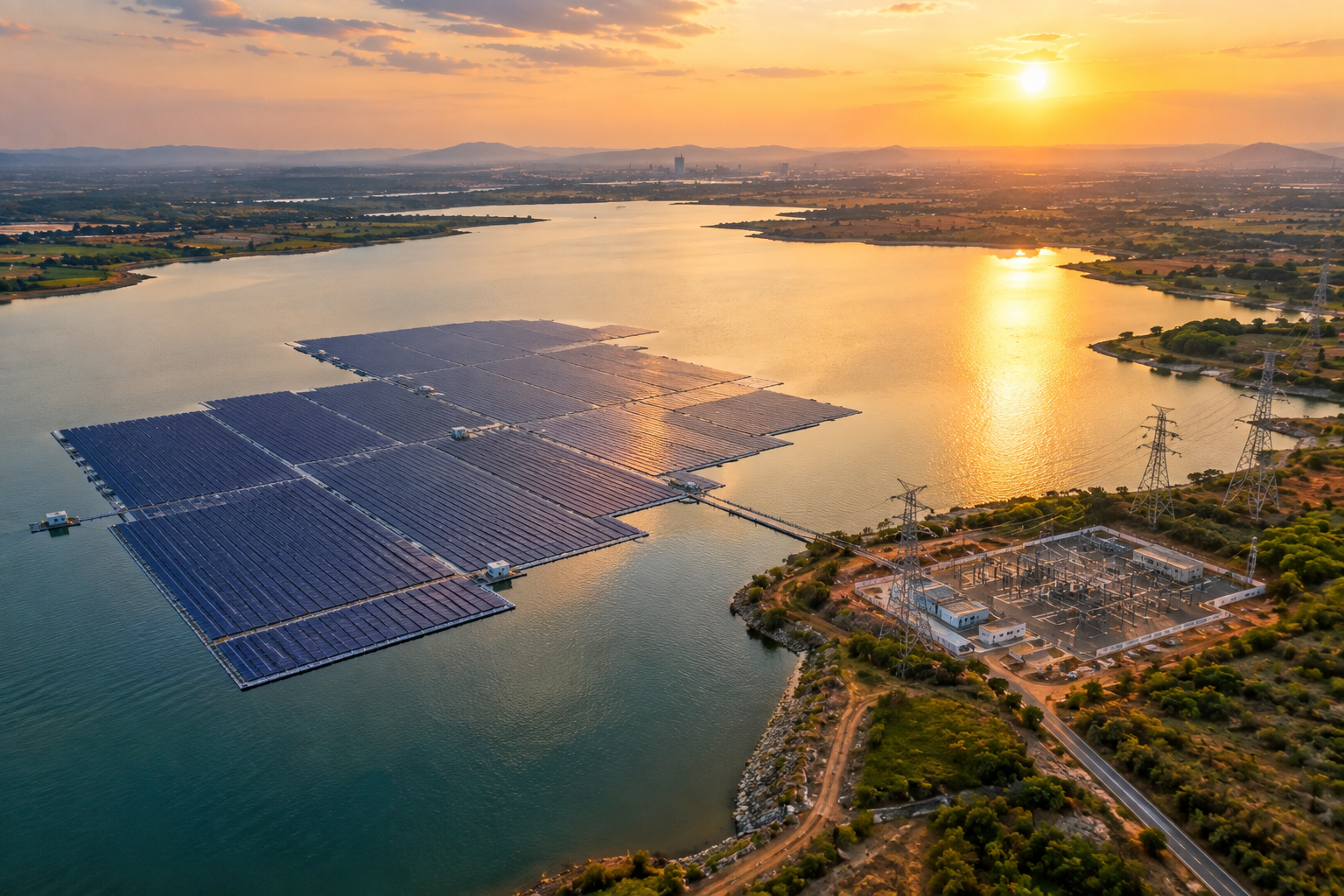
Telangana is exploring a major expansion of floating solar power as the state’s electricity demand continues to rise, signalling a broader shift toward innovative renewable-energy solutions that can generate clean power without competing directly for large areas of land.
Deputy Chief Minister Bhatti Vikramarka said the state government is examining the feasibility of floating solar plants across major and medium irrigation reservoirs. The energy and irrigation departments are jointly studying potential sites, with an announcement on the initiative expected soon.
According to the report, the state’s peak power demand stood at around 15,000 MW in December 2023 when the Congress government assumed office. By September 9, 2026, peak demand had reached 19,543 MW, with industrial expansion and rising purchasing power identified as major drivers.
The increase highlights a fundamental challenge for fast-growing states: electricity generation and distribution infrastructure must expand alongside economic activity.
For Telangana, renewable energy is increasingly becoming part of that long-term capacity strategy.
Floating solar offers a distinctive advantage compared with conventional ground-mounted projects: the solar panels are installed on water bodies rather than occupying additional land.
Telangana is examining reservoirs including Nagarjuna Sagar, Srisailam, Pulichintala, Sri Ram Sagar, Sripada Yellampalli, Devadula, Palair, Wyra, Mallanna Sagar, Lower Manair Dam, Mid-Manair and Pocharam for potential floating-solar development.
This approach could be particularly relevant for a state balancing agricultural requirements, industrial expansion, urban development and renewable-energy deployment.
Floating solar can also potentially reduce water evaporation from reservoir surfaces, although project-specific environmental, engineering and operational assessments remain important.
Despite its potential, floating solar is generally more expensive than conventional ground-mounted solar.
Bhatti said the state is examining ways to address the higher project costs and attract greater investment. The Centre’s viability-gap-funding programme can provide support of up to ₹1 crore per MW, according to the report. However, the state government has raised concerns about conditions attached to the programme.
One issue highlighted was the requirement to use domestically manufactured equipment, which the deputy chief minister said can increase project costs by approximately ₹1.30 crore per MW.
Telangana has therefore indicated that greater flexibility in such requirements could encourage more investor participation in floating-solar projects.
India’s solar expansion has historically relied heavily on large ground-mounted projects and rooftop installations.
Floating solar introduces another development pathway by making use of existing reservoirs and other suitable water bodies.
For states with limited land availability or competing land-use priorities, this could become an increasingly attractive option.
The model also creates opportunities to integrate floating solar with existing water and power infrastructure, potentially reducing some land-related constraints associated with large renewable projects.
Telangana’s clean-energy strategy is also looking beyond solar generation alone.
The state government is considering solar power and pumped-storage projects as potential alternatives for managing its growing electricity needs and reducing the financial pressure associated with electricity subsidies.
This is significant because the next stage of renewable-energy growth will require more than simply adding solar capacity.
Solar generation is strongest during daylight hours, while electricity demand can remain high into the evening. Storage technologies can help shift renewable electricity across time and improve the flexibility of the power system.
Floating solar combined with storage could therefore become part of a broader clean-power architecture rather than operating as an isolated generation technology.
The floating-solar proposal comes against the backdrop of Telangana’s significant electricity subsidy commitments.
The state government currently spends nearly ₹14,000 crore annually on free electricity for agricultural pump sets, while approximately 55 lakh families receive up to 200 units of free electricity, costing another ₹5,000 crore annually. The combined electricity subsidy burden is therefore around ₹19,000 crore per year, according to the report.
Against this backdrop, increasing renewable generation could play a role in the state’s longer-term strategy to meet demand while managing the economics of electricity supply.
Telangana’s floating-solar proposal illustrates how India’s renewable-energy transition is becoming increasingly diversified.
The next phase could involve a combination of:
- Ground-mounted solar
- Floating solar
- Wind energy
- Battery energy storage
- Pumped-storage hydropower
- Transmission infrastructure
- Smart-grid technologies
- Demand-side management
Such an integrated approach could help states manage rapidly increasing electricity demand while reducing dependence on conventional generation.
Telangana’s growing interest in floating solar reflects a wider shift in India’s renewable-energy strategy: the focus is increasingly moving from simply adding renewable capacity to finding innovative ways to integrate clean energy into land, water and electricity infrastructure.
With peak power demand reaching 19,543 MW, the state faces a growing requirement for new generation and stronger power infrastructure. Floating solar could provide an additional pathway by utilising reservoir surfaces while limiting competition for land.
However, higher project costs and equipment requirements remain important challenges. The eventual success of Telangana’s floating-solar strategy will depend on project economics, financing support, technology, reservoir suitability, grid connectivity and long-term power procurement.