 openaccessexchange@gmail.com
 Mon - Fri: 9 AM to 8 PM


When Women Lead, Solar Shines Brighter
 March 12, 2026
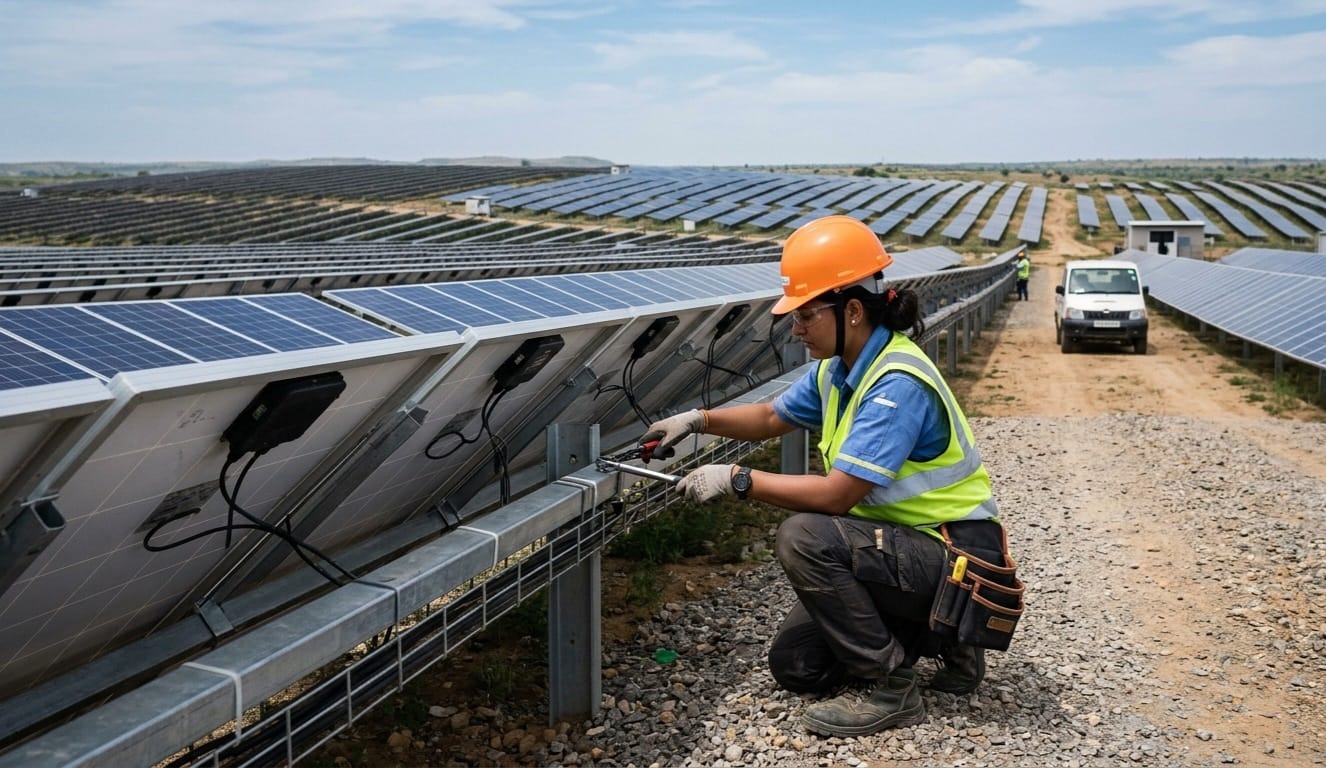
There is something quietly powerful happening in the plains of Koppal, Karnataka. While most people associate large solar project sites with heavy machinery, male-dominated teams and remote dusty locations, a 300 MW solar project being built here is telling a very different story. It is a story about women who packed their bags, left their hometowns behind and walked onto one of India’s biggest clean energy project sites — hard hats on, ready to lead.
Tata Power Renewable Energy Limited is developing this massive 300 MW solar project for SECI in Koppal, and what makes it stand out is not just the scale of the project. Out of the total workforce on site, 19 women make up nearly 37 percent of the team. They are not in supporting roles or administrative positions — they are managing critical on-site decisions, coordinating with contractors, overseeing complex electrical installations and taking real responsibility for a project spread across hundreds of acres of land.
These women come from all corners of India — Uttar Pradesh, Karnataka, Andhra Pradesh, Jharkhand and Kerala. Each of them carried their own set of challenges to get here. Some had to convince their families that a field role at a remote project site was a valid and safe career choice. Others stepped into technical environments where women in leadership positions were still considered unusual. None of them had an easy path, but all of them chose to walk it anyway.
Life on a remote project site is demanding regardless of who you are. The Koppal sun is unforgiving by mid-morning, plans change without warning and problems need to be solved quickly on the ground. But the women here speak about something beyond the difficulty — the deep satisfaction of watching progress happen on land that once stood completely empty. For younger engineers on the team, it is their first real exposure to large-scale infrastructure work, and the confidence they are building day by day is visible in the way they carry themselves across the site.
Making this possible wasn’t just about hiring more women. Tata Power ensured that the right support systems were in place — safe accommodation, reliable transportation, CCTV monitoring across key areas, regular safety training including self-defence workshops, and gender sensitisation programs for the entire workforce. But beyond the physical facilities, what many of the women value most is something harder to create — a culture where they feel genuinely trusted. Senior leaders are approachable, guidance is always available, and communication is open and direct.
Vijayalaxmi K, who serves as Site Manager for the Koppal project, sums it up simply — the trust placed in women to lead challenging roles at remote sites reflects a mindset that is changing within the industry. Back in their hometowns, these women are also quietly changing perceptions. Their families hear about the vast solar fields they manage, the teams they lead and the responsibilities they carry. Slowly, a new picture of what a woman in engineering can look like is taking shape — one solar panel at a time.