 openaccessexchange@gmail.com
 Mon - Fri: 9 AM to 8 PM


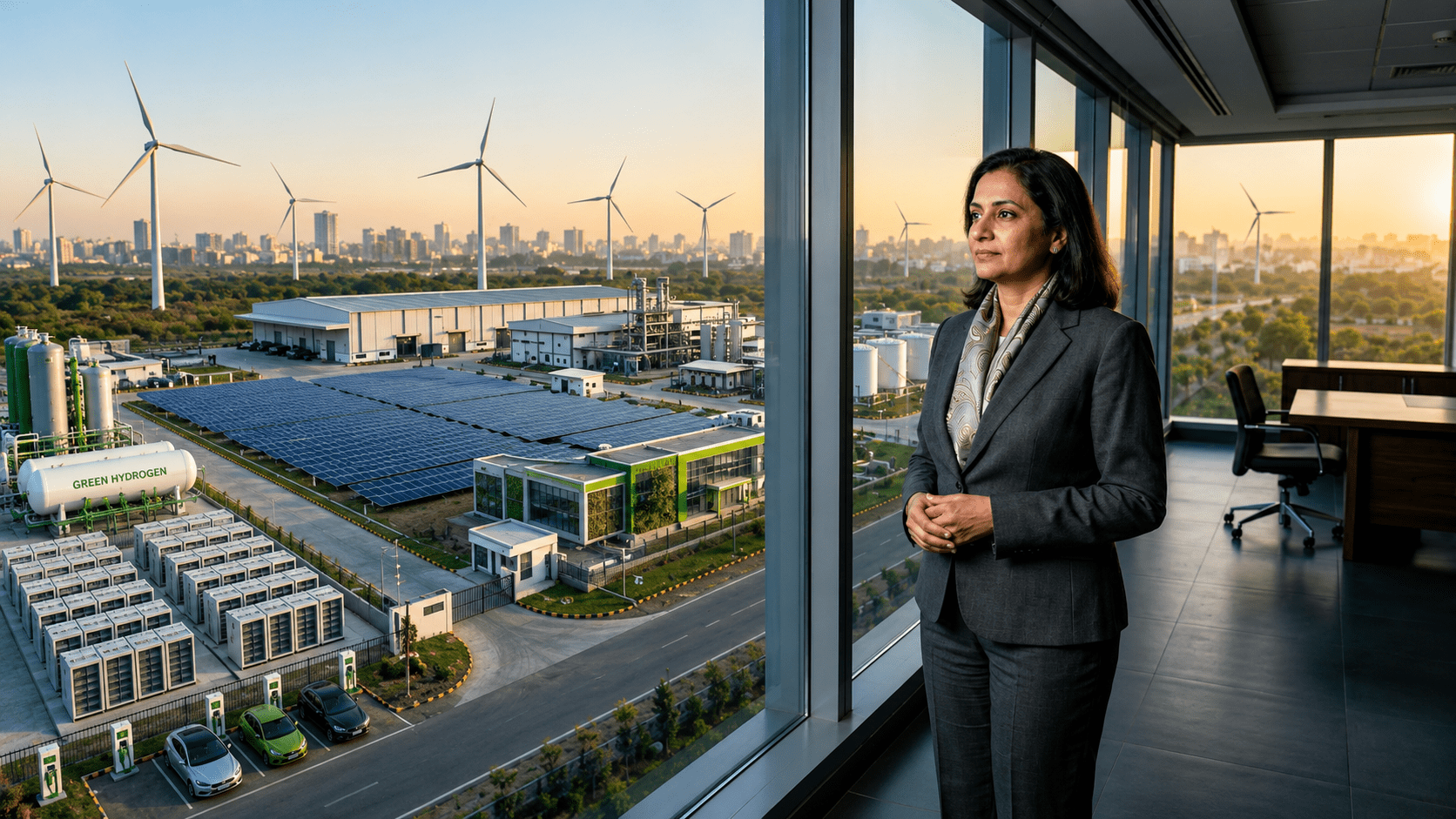
The Future of Energy Is Already Being Written — Are Indian Businesses Ready?
There’s a phrase that gets thrown around a lot in energy circles: “The energy transition is inevitable.“
It’s true. But what that sentence doesn’t capture is the speed — and for Indian businesses, the speed is where everything changes.
The decisions that industries make about energy in the next three to five years won’t just affect their electricity bills. They’ll determine market position, access to global capital, regulatory compliance, and in some cases, whether a business model is viable at all in a carbon-constrained economy.
The future of energy isn’t something to prepare for someday. It’s something to navigate right now, with one eye on today’s opportunities and another firmly fixed on what’s coming next.
Here’s what that future looks like — and what it means for business owners, investors, and anyone who cares about building something that lasts.
The Curve Has Already Bent — And It’s Not Bending Back
India crossed several energy milestones in recent years that would have seemed optimistic just a decade ago. Installed renewable energy capacity has grown at a pace few predicted. Solar tariffs have fallen so dramatically that new renewable projects are now routinely cheaper than coal-based power — on a per-unit basis, without subsidies.
This isn’t a trend that plateaus. It accelerates.
The economic logic of clean energy has fundamentally shifted. For most of the 20th century, fossil fuels won the cost argument. Today, renewable energy wins it — and the margin is widening every year. Over the next decade, the industries that have locked in long-term renewable power contracts at today’s rates will look back at this period the way smart property buyers look back at 2012.
The window for securing the best rates, the most favorable terms, and the cleanest transition path is open. But windows don’t stay open forever.
What the Next 10 Years Actually Look Like
Let’s get specific. Here are the forces that will reshape India’s energy landscape between now and 2035 — and what each one means for the businesses and investors paying attention.
–1. Battery Storage Will Remove the Last Argument Against Renewables
The most common pushback against renewable energy has always been intermittency — solar doesn’t generate at night, wind isn’t always blowing. For years, that was a valid concern.
It’s rapidly becoming a solved problem.
Battery Energy Storage Systems (BESS) are scaling at a pace that mirrors what happened with solar panels in the 2010s: costs falling sharply, capacity growing exponentially, deployment accelerating. India’s government has already announced production-linked incentive (PLI) schemes for advanced battery chemistry, and utility-scale storage projects are moving from pilot phase to mainstream procurement.
By the early 2030s, the combination of solar or wind generation paired with battery storage will be able to deliver firm, dispatchable power around the clock — at costs that challenge conventional grid power. For industries currently hesitant about renewable energy’s reliability, the storage revolution will remove the final technical objection.
What this means for businesses: If reliability has been your reason to wait, the reliability gap is closing faster than most projections suggested. The businesses locking in renewable supply agreements now are establishing relationships and infrastructure before storage-backed products command a premium.
–2. Green Hydrogen Will Transform Energy-Intensive Industries
Green hydrogen — produced by splitting water using renewable electricity — is often described as the energy carrier of the future. For India, it’s becoming a strategic priority of the present.
The National Green Hydrogen Mission has set ambitious targets, and investments in electrolyzer manufacturing, hydrogen infrastructure, and export corridors are ramping up. For sectors like steel, fertilizers, chemicals, cement, and heavy transport — industries where electrification alone can’t reach the hardest emissions — green hydrogen represents a viable and increasingly cost-competitive pathway to deep decarbonization.
This matters to business owners in those sectors not just as environmental policy, but as supply chain reality. Global buyers — especially those operating under the EU’s Carbon Border Adjustment Mechanism (CBAM) and similar frameworks — are beginning to differentiate between manufacturers based on embedded carbon content. The producer who can demonstrate low-carbon inputs will have a genuine commercial advantage over one who cannot.
What this means for investors: Green hydrogen infrastructure in India is at an early, high-upside stage. The projects being funded today — in electrolyzers, storage, and industrial applications — are positioning for a global market that analysts broadly expect to be worth hundreds of billions of dollars by 2040.
–3. Smart Grids and AI Will Make Energy a Dynamic Asset, Not a Fixed Cost
The electricity grid of 2035 will look nothing like the grid of 2015. The integration of smart meters, IoT sensors, AI-driven demand forecasting, and real-time energy trading platforms is creating a grid that is interactive, intelligent, and responsive in ways that were previously impossible.
For businesses, this means energy will shift from being a passive cost — you use what you use, you pay what you’re billed — to being a manageable, optimizable, and even tradeable asset.
Consider what becomes possible in an AI-powered grid environment:
– Dynamic load scheduling that automatically shifts energy-intensive processes to off-peak hours or periods of peak renewable generation
– Real-time optimization of power procurement between Open Access contracts, spot markets, and battery storage
– Participation in demand response programs that generate revenue by reducing consumption on request from the grid operator
– Predictive maintenance of energy systems using machine learning models trained on consumption data
Companies that invest in energy intelligence infrastructure now — whether through smart metering, energy management systems, or renewable procurement platforms — will be positioned to extract value from these capabilities as they mature. Insta reel download url
What this means for businesses: Energy management is becoming a specialized competency. Businesses that treat it as such — rather than delegating it entirely to a utility and moving on — will compound their cost advantages over time. copy link reels download
–4. Carbon Markets Will Assign Real Economic Value to Every Unit of Green Power
India’s Carbon Credit Trading Scheme (CCTS) is moving from framework to functioning market. The inclusion of energy-intensive sectors in mandatory reporting and, eventually, in cap-and-trade mechanisms means that the carbon footprint of industrial energy consumption will carry a direct financial cost. reel video downloader free
This is already the reality for Indian exporters dealing with European supply chains, where CBAM effectively prices embedded carbon into the cost of imports. It will become the domestic reality for large industries as the CCTS matures.
Renewable Energy Certificates (RECs), carbon offset credits, and verified green power consumption records — all of which are generated through Open Access renewable procurement — are going to be worth real money in a carbon-priced economy. Businesses that have already established clean energy supply chains will be selling or using assets that their competitors will need to scramble to acquire.
What this means for investors: Carbon assets tied to verified renewable energy infrastructure are emerging as a distinct investable category. The value of clean power isn’t just in the electricity it replaces — it’s in the regulatory currency it generates.
–5. ESG Will Move from Disclosure to Differentiation to Demand
India’s Business Responsibility and Sustainability Report (BRSR) framework has already made sustainability disclosure mandatory for the top 1,000 listed companies. As the framework matures and cascades down supply chains, the reporting requirement will eventually reach thousands of unlisted businesses that supply the top tier.
But beyond compliance, something more fundamental is happening. Global and domestic institutional investors are increasingly integrating ESG scores into allocation decisions. Green finance products — green bonds, sustainability-linked loans, transition finance instruments — offer preferential pricing to businesses that can demonstrate genuine decarbonization progress.
In practical terms: the cost of capital for a business with a credible renewable energy supply strategy is beginning to diverge meaningfully from the cost of capital for one without it.
*What this means for businesses:* Your energy mix is becoming part of your financial profile. Renewable energy isn’t just an operating expense optimization — it’s a balance sheet story.
The Businesses That Will Win the Next Decade
Looking at all of these trends together, a picture emerges of the types of businesses that will be best positioned in 2030 and beyond:
They will have locked in long-term renewable power agreements at favorable rates, insulating them from grid tariff escalation and creating predictable energy cost structures. They will have integrated energy intelligence into their operations — understanding not just how much power they use, but when, how, and at what optimization opportunity. They will have carbon-clean supply chains that allow them to access global markets without friction. And they will have sustainability credentials that open doors to better financing, better partnerships, and better talent.
None of this requires waiting. The infrastructure to begin this journey exists today, through Open Access renewable energy procurement, group captive structures, and deferred CAPEX financing models that remove the barrier of upfront investment.
A Note on Timing
There’s a tendency in business to wait for certainty before making significant changes. To see how regulations settle, how technologies mature, how competitors move. It’s a rational instinct — but in energy transition, it’s an instinct that costs money.
Every year a business delays locking in a renewable PPA is a year it pays grid tariffs that continue to rise. Every year it delays establishing RECs and carbon credentials is a year’s worth of assets it doesn’t accumulate. Every year it waits for battery storage to be “proven” is a year spent not building the internal knowledge and partnerships that will matter when storage is mainstream.
The future of energy is not a destination to arrive at later. It’s a journey that the smartest businesses in India are already well into — and one that compounds in value the sooner it begins. Reels Video Downloader
The Bottom Line
India’s energy future is more exciting, more dynamic, and more full of opportunity than at any point in the country’s industrial history. The convergence of affordable renewables, maturing storage, intelligent grids, carbon markets, and ESG-linked capital creates a landscape where the decisions businesses make today will have extraordinary leverage on their outcomes a decade from now. reel downloader free online
The question for every business owner, every investor, every sustainability leader reading this isn’t whether renewable energy is the future.
It clearly is. Bridal Jewellery
The question is whether you’re building your business to lead that future — or catch up to it.
Start Building Your Energy Future Today
Understanding where the energy landscape is heading is one thing. Taking concrete steps toward it is another. Whether you’re ready to explore Open Access power procurement, understand what a Group Captive structure could mean for your cost profile, or simply want to get a clearer picture of your current energy spend, Open Access Exchange is here to help you make the first move with confidence. Bridal Jewellery
Use the Solar Cost Savings Calculator →
Solar Cost & Savings Calculator
Or
Talk to Our Energy Advisors →
Contact Us
Open Access Exchange connects industries directly to renewable power — making clean energy not a dream, but a daily reality.