 openaccessexchange@gmail.com
 Mon - Fri: 9 AM to 8 PM


Adani Energy Solutions Signs 2,500 MW Power Deal with MSEDCL for 25 Years
 September 9, 2026
India’s electricity market is increasingly moving beyond simply adding generation capacity toward securing reliable, round-the-clock power. A new 2,500 MW agreement involving Adani Energy Solutions and Maharashtra State Electricity Distribution Company Limited (MSEDCL) highlights this shift.
Powerpulse Trading Solutions Limited (PTSL), a wholly owned subsidiary of Adani Energy Solutions, has entered into a 25-year Power Purchase Agreement (PPA) with MSEDCL to supply 2,500 MW of round-the-clock (RTC) power. The agreement was signed on September 8, 2026, following the assignment of the original Letter of Award from Adani Power.
The agreement provides MSEDCL with long-term access to 2,500 MW of RTC power from the scheduled commencement date of supply. Unlike conventional renewable procurement focused primarily on energy generation, RTC arrangements are designed around reliability and availability across different periods of the day.
This is becoming increasingly important as electricity demand grows and renewable generation expands. Solar power is highly productive during daylight hours, while demand can remain high after sunset. Combining multiple generation sources, power aggregation and portfolio management can therefore become increasingly important to maintain reliable supply.
MSEDCL serves one of India’s largest and most economically significant electricity markets. Maharashtra’s expanding industrial activity, urbanisation and commercial demand require dependable power infrastructure.
The long-term PPA can provide greater visibility around power procurement while supporting the state’s broader electricity requirements.
For Adani Energy Solutions, the transaction also expands the role of its energy-solutions business. The company said the agreement aligns with PTSL’s capabilities in multi-source energy aggregation, power portfolio management and power-supply optimisation.
India’s evolving electricity system increasingly requires coordination between generation, transmission, storage and demand.
Power aggregators can combine electricity from different sources and manage supply portfolios according to customer requirements. This becomes particularly valuable when renewable generation varies throughout the day.
The development therefore reflects a broader transition from a traditional generation-centric electricity model toward an integrated energy-management model.
The MSEDCL agreement comes as Adani Energy Solutions continues to expand its transmission portfolio.
Business Today reported that the company recently won a transmission project involving the evacuation of renewable energy generated in Karnataka to major load centres in Maharashtra. The project carries an estimated capital expenditure of ₹4,700 crore and is also expected to support the growing pumped-storage ecosystem around Satara, Pune and the Mumbai Metropolitan Region.
This combination is significant. As renewable capacity increases, India’s energy infrastructure needs not only more generation but also transmission corridors, energy storage, balancing resources and sophisticated power-management systems.
The 2,500 MW agreement illustrates an important development in India’s energy transition: the industry is increasingly focused on delivering usable and dependable electricity, rather than renewable generation capacity alone.
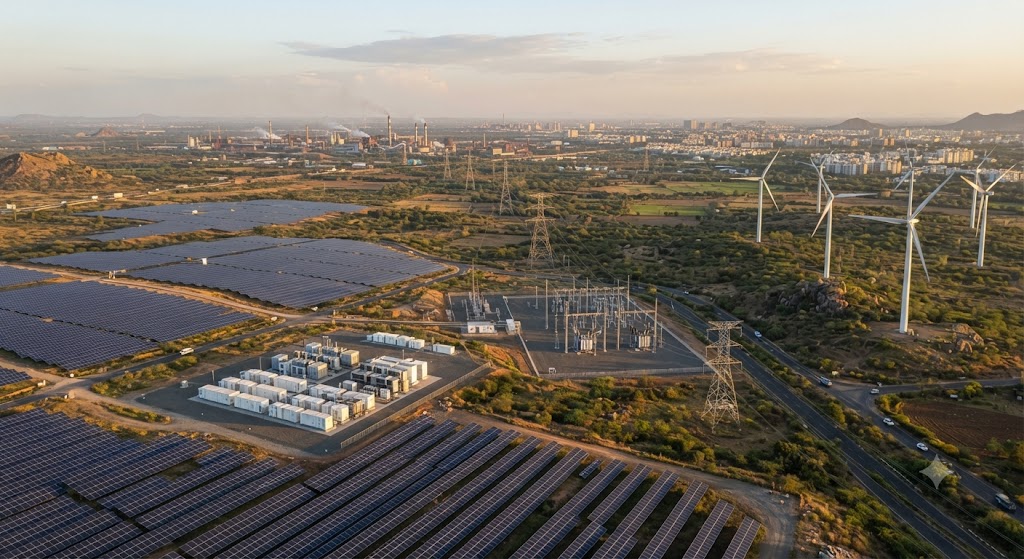
Solar, wind, battery storage, pumped hydro, transmission infrastructure and power aggregation can work together to create a more flexible electricity system.
For large utilities and industrial consumers, this evolution could make RTC renewable power increasingly important as they seek to reduce emissions without compromising reliability.
Adani Energy Solutions’ 2,500 MW, 25-year PPA with MSEDCL highlights the changing nature of India’s power sector. The focus is increasingly shifting from simply adding megawatts to creating reliable, flexible and intelligently managed electricity supply.
As India’s renewable-energy share grows, the next phase of the transition will depend on how effectively generation is combined with storage, transmission and power-portfolio management.
The deal is therefore more than a long-term power contract—it is another indication that India’s clean-energy transition is moving toward a system built around reliability, flexibility and round-the-clock power availability.