 openaccessexchange@gmail.com
 Mon - Fri: 9 AM to 8 PM


India Proposes Mandatory Battery Storage for New Solar and Wind Projects from 2027
 September 5, 2026
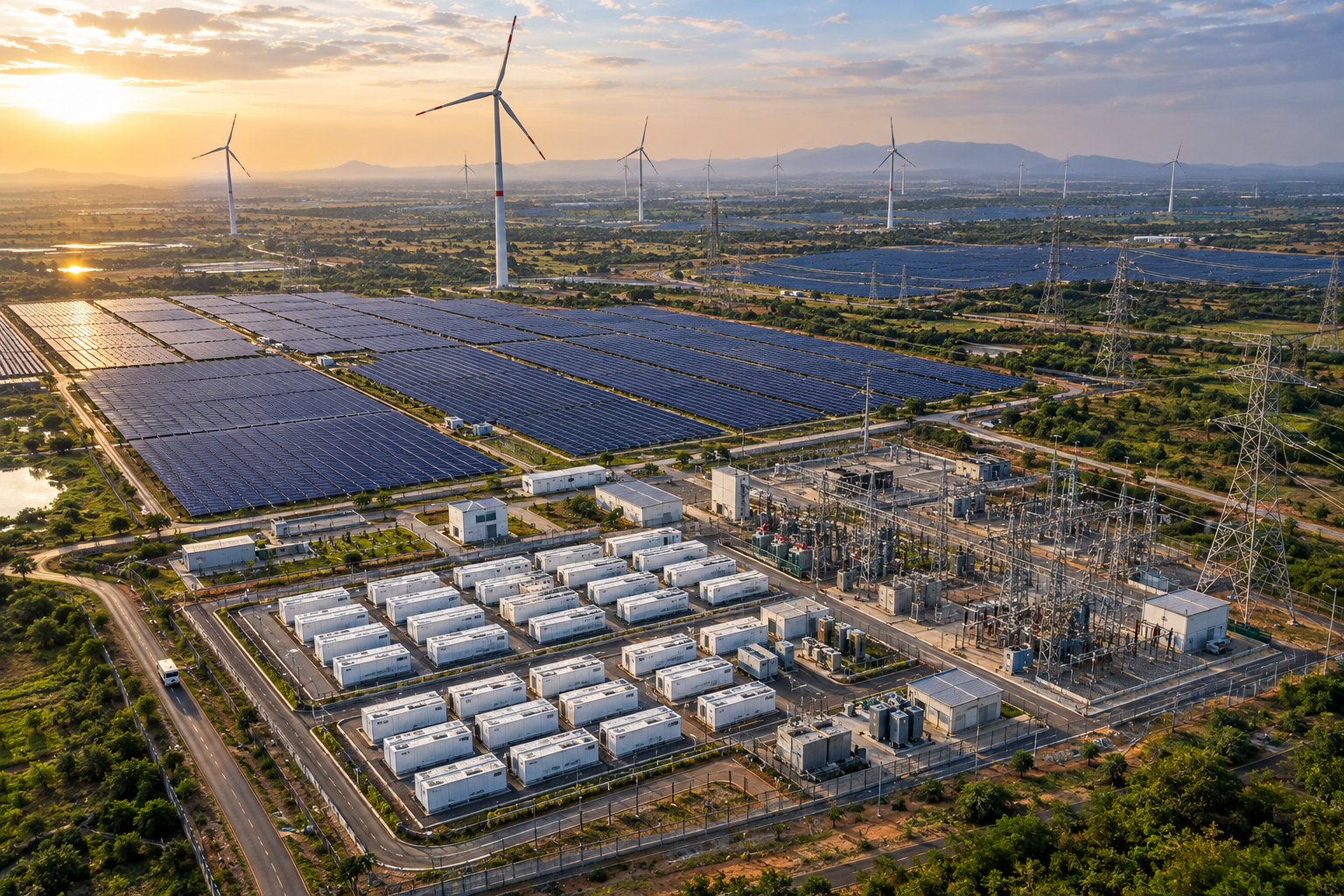
New ground-mounted solar and onshore wind projects commissioned in India from July 1, 2027, will be required to include co-located battery storage equivalent to at least 10% of their installed capacity for a minimum of two hours, under draft regulations proposed by the Central Electricity Authority (CEA).
The draft rules introduce a two-tier framework aimed at addressing grid stability and renewable curtailment as clean energy capacity expands:
-
Phase 1 (July 2027 – June 2029): Projects must feature a battery energy storage system (ESS) with a capacity equal to at least 10% of total generation capacity, capable of running for 2 hours (e.g., a 100 MW plant requires a 10 MW / 20 MWh system).
-
Phase 2 (July 2029 – June 2031): The storage capacity requirement remains at 10%, but the minimum duration doubles to four hours (e.g., a 100 MW plant will require a 10 MW / 40 MWh system).
Additionally, the proposed regulations mandate that power conversion systems for battery storage and at least 15% of inverters in new renewable plants incorporate grid-forming controls to actively support grid stability.
The move shifts India’s clean-energy strategy from focusing purely on gigawatt-scale capacity additions to ensuring temporal flexibility and reducing power curtailment. The CEA has invited public and stakeholder comments on the draft regulations through October 4, 2026.