 openaccessexchange@gmail.com
 Mon - Fri: 9 AM to 8 PM


No Solar or Wind Projects Within 1 Km of International Border, Home Ministry Says
 August 8, 2026
The Union Home Ministry has stated that solar and wind renewable energy projects cannot be established within one kilometre of India’s international borders, highlighting the security considerations surrounding large infrastructure projects in sensitive border areas.
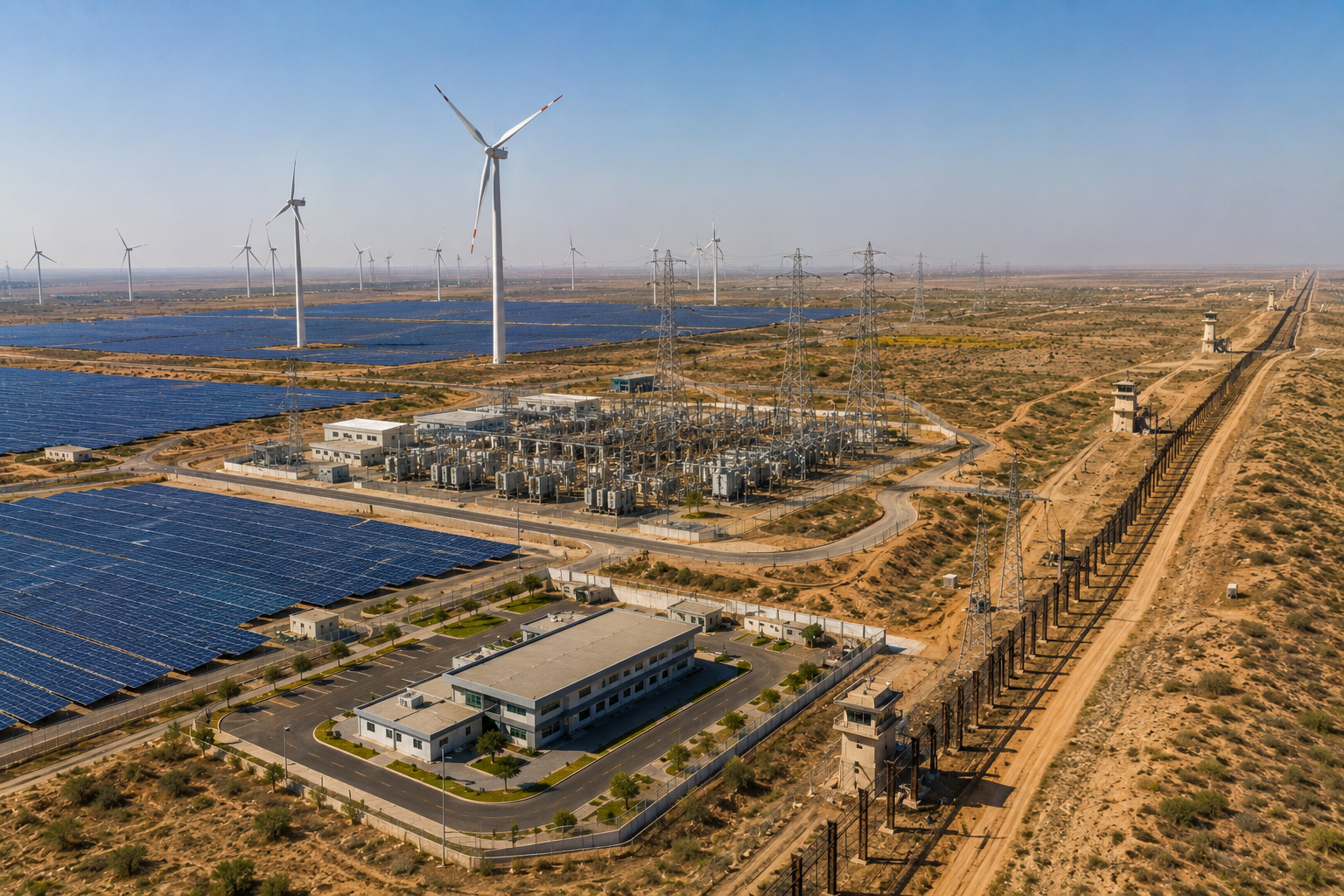
The clarification comes amid growing renewable energy development across several parts of India, including regions located close to international boundaries. The issue has gained particular attention in the context of large renewable energy parks in Gujarat’s Kutch region, where major solar and wind installations are being developed close to the India-Pakistan border.
Border areas present unique challenges for infrastructure planning because large renewable energy facilities can include extensive solar arrays, wind turbines, transmission lines, substations and other permanent structures.
The government’s position reflects the need to balance India’s rapidly expanding renewable energy ambitions with national security requirements.
Large-scale renewable projects can occupy thousands of hectares and require associated transmission and grid infrastructure. Their location near sensitive border zones therefore requires coordination with security and defence authorities.
The issue is particularly relevant to renewable energy parks located in strategically sensitive areas. The Khavda renewable energy development in Gujarat, for example, is located close to the India-Pakistan border and has previously been subject to discussions around security clearances and construction restrictions. Earlier reporting has documented different security-related conditions and relaxations associated with renewable development in the region.
India is targeting a significant expansion of renewable energy capacity over the coming years, with solar and wind power expected to remain central to the country’s energy transition.
However, the latest clarification underscores that renewable energy expansion cannot be planned independently of strategic considerations. Project developers may need to evaluate alternative sites, obtain appropriate clearances and incorporate security requirements when developing projects near international borders.
This could influence the planning of future solar parks, wind farms and hybrid renewable energy projects in border states such as Gujarat, Rajasthan, Jammu and Kashmir and other regions adjoining India’s international boundaries.
For developers, location selection will remain an important factor alongside solar and wind resource availability, land costs, transmission connectivity and grid access.
Restrictions around sensitive border areas could require developers to identify sites farther from international boundaries or work within specific security and defence guidelines where applicable.
The development also highlights the growing importance of coordination between India’s energy and security institutions as the country expands its renewable energy infrastructure.
With renewable projects increasingly moving into large, remote and strategically important areas, energy security and national security are becoming increasingly interconnected considerations in infrastructure planning.