 openaccessexchange@gmail.com
 Mon - Fri: 9 AM to 8 PM


Climate Change and the Rising Risk to Himalayan Hydropower Infrastructure
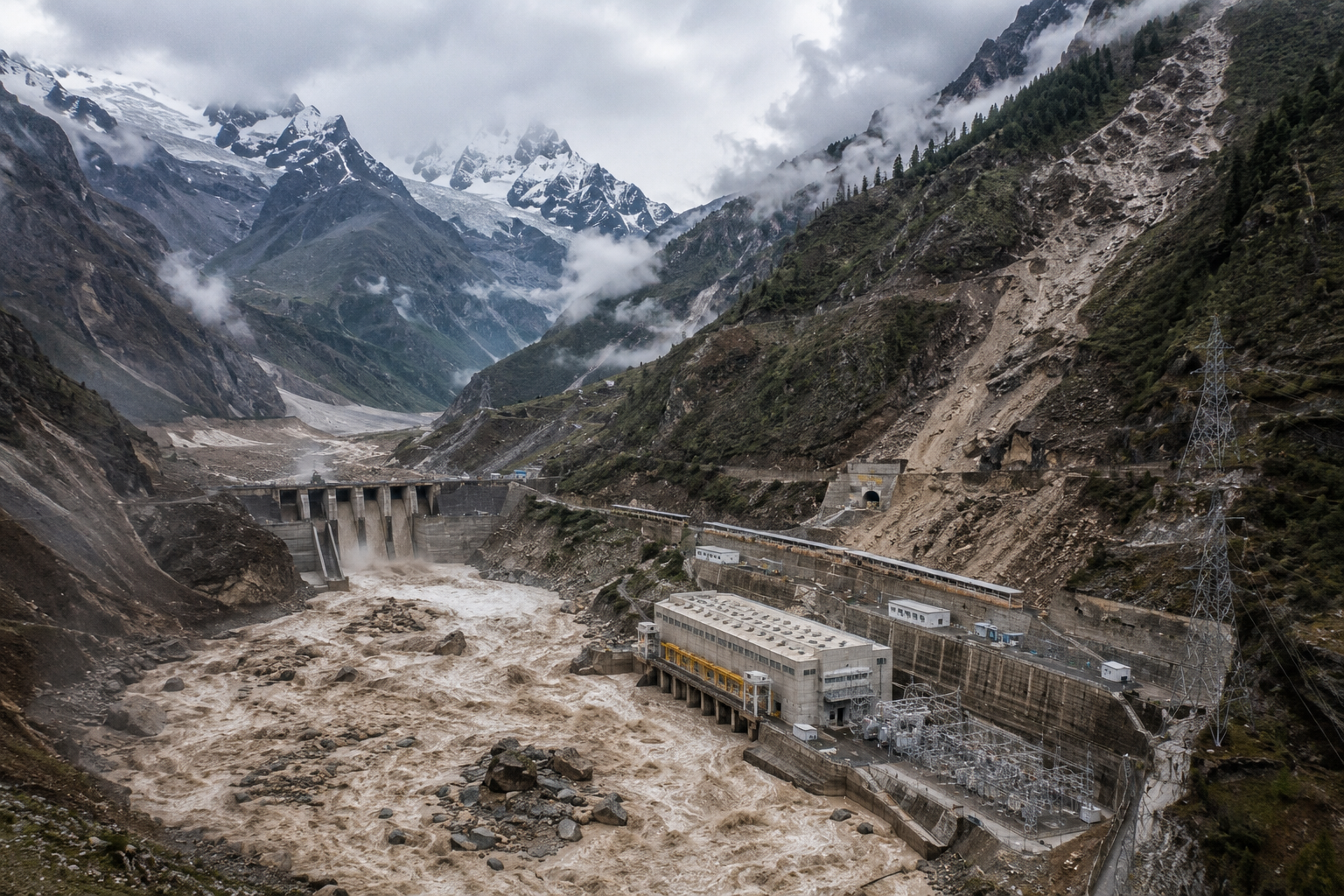
The latest flooding disaster in Nepal’s Himalayan region is highlighting a difficult reality for the clean-energy transition: renewable infrastructure is not automatically protected from climate change.
A landslide and glacier collapse triggered devastating flooding in Nepal, damaging hydropower infrastructure and exposing the vulnerability of projects located in narrow mountain valleys and downstream of glaciers and unstable slopes. The disaster reportedly damaged 12 hydropower plants representing more than 400 MW of operating capacity.
Why Himalayan Hydropower Is Vulnerable
The Himalayas provide exceptional conditions for hydropower, combining steep elevation changes with rivers fed by monsoon rainfall, snow and glacier melt. This has made the region a major focus for new renewable-energy investment.
More than 40 GW of hydropower capacity is already operating across the Himalayan region, while another 200 GW is reportedly in various stages of planning.
However, the same geography that makes hydropower attractive can also amplify climate-related risks.
Warming temperatures are contributing to changes in glaciers, snowpack and permafrost. These changes can destabilise mountain slopes and increase the potential for glacial lake outburst floods, landslides, debris flows, ice-rock avalanches and sudden river flooding.
Nepal’s Hydropower Ambition Faces a Resilience Test
Hydropower is central to Nepal’s economic and energy strategy. The country aims to increase generation capacity more than sixfold to nearly 30 GW by 2035, with more than half intended for export.
India has agreed to increase imports of Nepalese electricity, while Bangladesh has also begun purchasing power from Nepal. This gives hydropower an important role not only in Nepal’s domestic electricity system but also in regional energy trade.
The recent disaster, however, demonstrates how physical climate risks can affect both electricity generation and the economic assumptions behind large infrastructure investments.
The Challenge Goes Beyond Nepal
The issue is regional.
India and China have major hydropower ambitions in the Himalayas, while projects are also being developed or financed across countries including Nepal and Pakistan. Extreme weather has already affected hydropower infrastructure in India, including the 2021 Uttarakhand disaster, which damaged two hydropower plants.
This means future hydropower planning increasingly needs to consider not only river flows and electricity demand, but also changing geological and climatic conditions.
Building More Climate-Resilient Hydropower
The article points toward a shift in how Himalayan projects may need to be designed.
Potential measures include locating powerhouses underground, strengthening tunnels and installing fast-acting gates to limit debris entering critical infrastructure. At the same time, rising physical risks could increase construction and insurance costs.
The larger lesson is important for the energy transition: resilience needs to become part of renewable-energy infrastructure planning from the beginning.
The Bigger Energy-Transition Question
Hydropower remains one of the world’s largest sources of clean electricity and provides valuable flexibility compared with variable renewable sources. But climate change is altering the physical environments in which many hydropower projects operate.
The question is therefore no longer simply how much renewable capacity can be built.
It is also where it should be built, how it should be designed and whether it can remain reliable under future climate conditions.
For Himalayan hydropower, the next phase of development may depend as much on climate resilience and risk management as on generation capacity.