 openaccessexchange@gmail.com
 Mon - Fri: 9 AM to 8 PM


Building India’s Circular Battery Ecosystem for a Resilient Energy Transition
India’s energy transition is entering a new phase. The rapid adoption of electric vehicles, expansion of renewable-energy capacity and deployment of battery energy storage systems are driving strong demand for lithium-ion batteries and the critical minerals needed to manufacture them.
But scaling battery manufacturing is only one part of the challenge.
India also needs a resilient supply of lithium, nickel, cobalt and other critical materials. Heavy dependence on imports exposes the battery value chain to supply disruptions, price volatility and concentrated global supply chains.
This is making battery recycling increasingly important—not simply as a waste-management activity, but as a strategic source of secondary raw materials.
Battery Manufacturing Needs a Stronger Materials Ecosystem
India is targeting nearly 220 GWh of announced domestic cell-manufacturing capacity by 2030, according to the KPMG article. The expansion raises an important question: how will the materials required to support this manufacturing scale be secured over the long term?
A circular battery economy could become an important part of the answer.
Instead of treating end-of-life batteries as waste, recycling systems can recover valuable materials and return them to the manufacturing cycle. Globally, recycling ecosystems are increasingly integrating collection, shredding, black-mass recovery, hydrometallurgical processing and refining.
This creates a more circular flow of materials from batteries back into battery production.
Recycling Could Strengthen Critical-Mineral Security
For India, the opportunity extends beyond building standalone recycling plants.
The larger requirement is an integrated ecosystem connecting battery manufacturers, vehicle manufacturers, recyclers, technology providers, collection networks and refiners.
The technology used for recycling will be particularly important. Shredding and hydrometallurgical processes are already widely adopted because of their recovery rates, material purity and economic potential. As lithium iron phosphate (LFP) batteries become more prominent, recycling technologies will increasingly need to recover battery-grade lithium salts and cathode materials efficiently.
Feedstock Will Become a Strategic Advantage
A recycling plant needs batteries to recycle.
That makes access to future end-of-life batteries a critical part of the business model.
The KPMG article notes that India’s EV battery demand is expected to increase from 20 GWh in 2025 to 200 GWh by 2032. As today’s batteries eventually reach the end of their useful lives, they could provide an increasingly important domestic feedstock stream for recycling.
India’s Extended Producer Responsibility (EPR) framework is also becoming an important component of this ecosystem by requiring producers to meet recycling obligations through certified recyclers.
Collection networks, reverse logistics, traceability and effective EPR mechanisms will therefore become increasingly important.
Battery-as-a-Service Could Improve Circularity
Another emerging model is Battery-as-a-Service (BaaS).
Under this approach, battery ownership can remain with an OEM, fleet operator or service provider rather than the individual vehicle owner. This can improve visibility into battery health, utilisation and eventual end-of-life availability.
For recyclers, better visibility could translate into a more predictable supply of used batteries.
It also creates opportunities to manage batteries across their entire lifecycle—from deployment and monitoring to second-life applications and eventual material recovery.
Recycling and Gigafactories Need to Be Connected
Location strategy could also influence the economics of India’s circular battery ecosystem.
As domestic gigafactory capacity expands, locating recycling facilities close to manufacturing hubs could reduce transportation requirements and make it easier to return recovered materials to battery production.
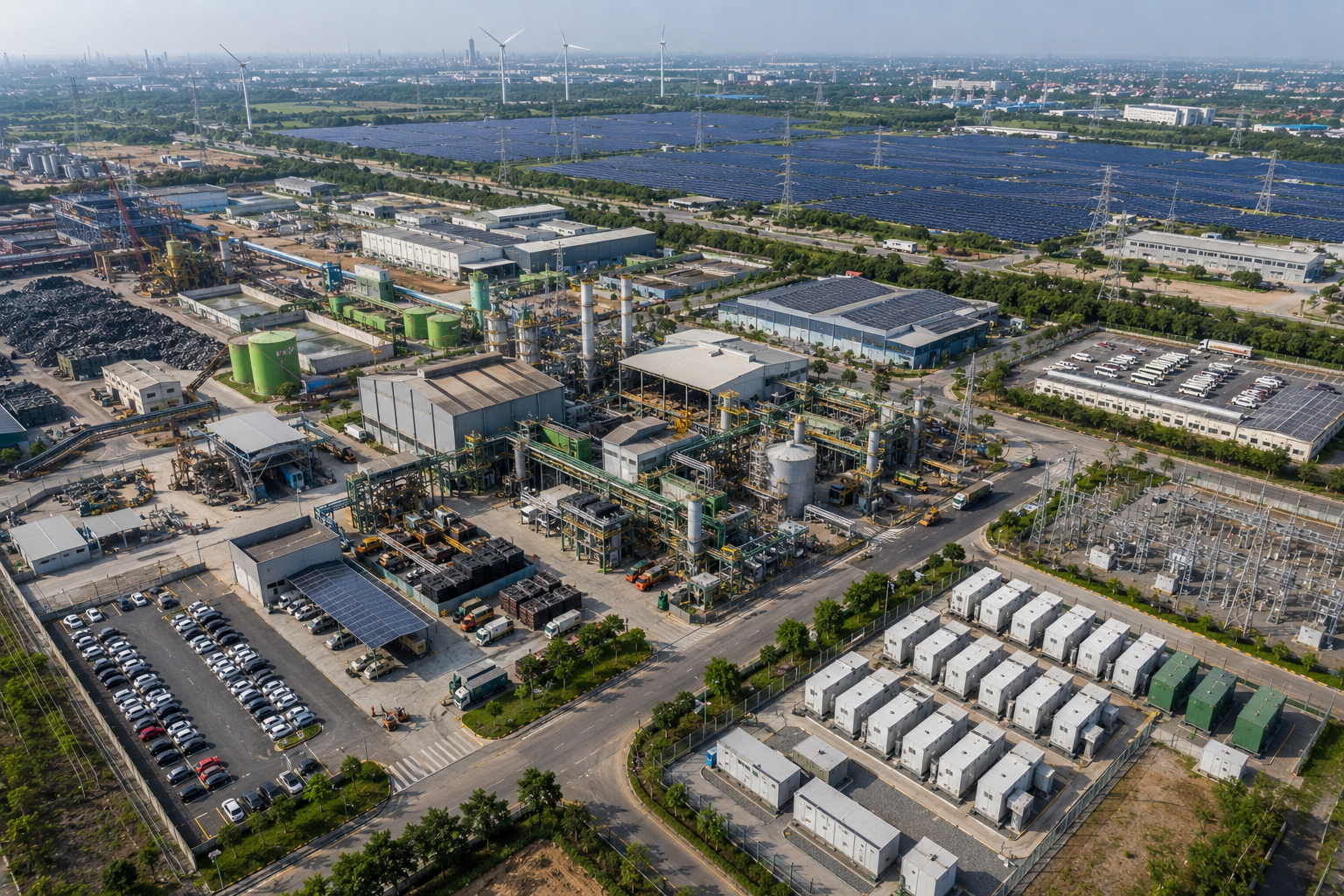
This creates the possibility of geographically integrated battery ecosystems where manufacturing, recycling, refining and material recovery operate within connected industrial networks.
Recycling Alone Cannot Close the Materials Gap
Despite its strategic importance, recycling will not eliminate India’s need for primary mineral resources.
The KPMG article points out that even announced recycling capacities are expected to satisfy only a small portion of the mineral requirements associated with India’s planned gigafactory pipeline.
India will therefore need a broader strategy combining:
- Battery recycling
- Domestic critical-mineral development
- Advanced refining capacity
- International supply partnerships
- Efficient collection and reverse logistics
- Battery reuse and second-life applications
- Technology partnerships
Together, these elements can help build greater resilience across the battery value chain.
From Battery Manufacturing to Battery Circularity
India’s energy transition is increasingly moving beyond the question of how many batteries the country can manufacture.
The next question is whether India can create a complete battery lifecycle ecosystem.
That means designing systems in which batteries can be collected, tested, reused where appropriate, recycled at end of life and converted back into valuable materials for future production.
The National Critical Minerals Mission reflects this broader shift toward building an integrated critical-minerals ecosystem rather than focusing on individual resources in isolation.
The Bigger Picture
India’s EV and renewable-energy ambitions will increase the importance of batteries across transportation and electricity systems.
That makes battery circularity an increasingly important part of energy security.
A successful circular battery ecosystem could reduce waste, recover valuable materials, strengthen domestic supply chains and reduce exposure to volatile international markets.
The next stage of India’s battery journey, therefore, may be defined not only by manufacturing capacity, but by the country’s ability to recover, reuse, refine and recirculate the materials inside those batteries.
Circularity could become one of the defining pillars of India’s next phase of energy transition.