 openaccessexchange@gmail.com
 Mon - Fri: 9 AM to 8 PM


Puga Valley Geothermal Energy Project and India’s Emerging Geothermal Power Potential
India’s renewable-energy transition has largely been associated with solar and wind power. But the country is now beginning to explore another resource that has been available beneath its surface for millions of years: geothermal energy.
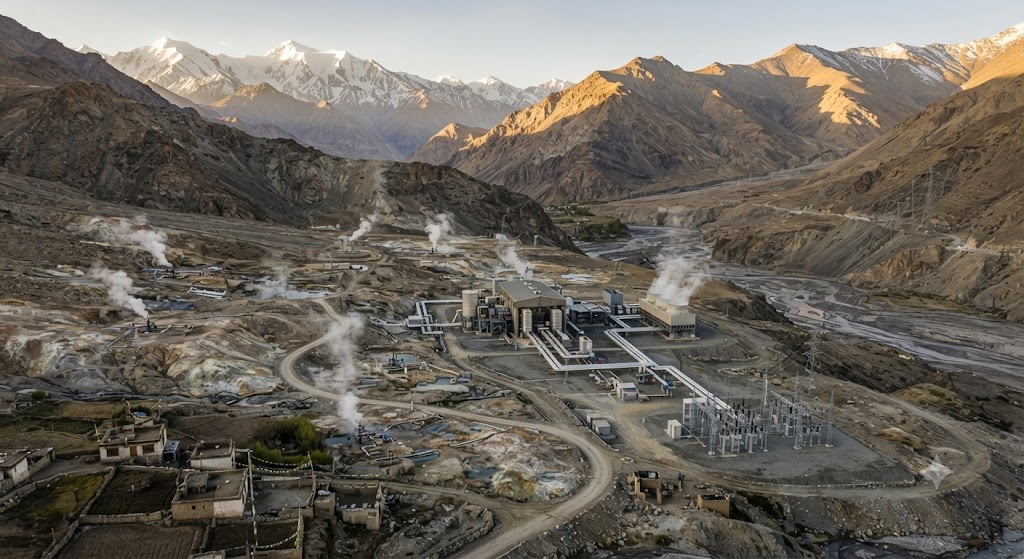
The Puga Valley Geothermal Energy Project in Ladakh represents an important step in this direction. Located at an altitude of more than 14,000 feet, Puga Valley is known for its hot springs and strong geothermal activity. The project is being developed by the ONGC Energy Centre and is planned as a 1 MW pilot geothermal power project.
What Makes Geothermal Energy Different?
Geothermal energy harnesses the natural heat stored beneath the Earth’s surface.
Unlike solar and wind generation, which vary according to sunlight and weather conditions, geothermal resources can potentially provide continuous, weather-independent electricity when suitable underground reservoirs are available.
This makes geothermal particularly interesting as India looks to build a renewable-energy system that combines variable renewable generation with more reliable clean-power sources.
India’s First Geothermal Wells at Puga
The Puga project has moved beyond resource assessment with the development of two geothermal wells reaching approximately 1,000 metres.
The wells are intended to support reservoir evaluation and the development of the 1 MW pilot plant. The project has been undertaken in an exceptionally challenging high-altitude environment, demonstrating India’s growing technical capability in geothermal exploration and drilling.
How the Project Can Generate Electricity
The basic geothermal power cycle is relatively straightforward:
- Drilling: Wells reach the underground geothermal reservoir.
- Extraction: Hot geothermal fluids are brought to the surface.
- Heat conversion: Heat or steam is used to drive a turbine.
- Electricity generation: The turbine drives a generator.
- Reinjection: Cooled geothermal fluid can be returned underground to support sustainable reservoir management.
The Puga project can therefore serve not only as a power-generation demonstration but also as an opportunity to build India’s knowledge base for future geothermal development.
Why Puga Matters for India’s Energy Transition
The significance of Puga extends beyond its initial 1 MW capacity.
India needs a diversified renewable-energy portfolio as electricity demand continues to grow. Solar and wind will remain major sources of new capacity, but geothermal could provide a complementary source of stable renewable electricity in locations with suitable geological conditions.
For remote regions such as Ladakh, reliable local clean-energy resources could also reduce dependence on conventional power-supply arrangements and diesel-based generation.
Geothermal Could Support More Than Electricity
Geothermal resources are not limited to power generation.
Depending on the temperature and characteristics of a resource, geothermal heat can potentially be used for:
- Space heating
- Greenhouses and agriculture
- Industrial processes
- Water heating
- Other direct-heat applications
This could be particularly relevant in cold, high-altitude regions where heating demand is significant.
A Broader National Geothermal Strategy
Puga is also developing within a broader policy framework.
India notified its National Policy on Geothermal Energy in September 2025, providing a framework for exploration, technology development, direct-heat applications and electricity generation. The policy also seeks to promote research, innovation, international cooperation and the possible repurposing of abandoned oil and gas wells for geothermal applications.
The Puga experience could therefore become a foundation for evaluating geothermal resources in other parts of India.
Challenges Remain
Geothermal energy is promising, but it is not universally deployable.
Projects can face:
- High exploration and drilling costs
- Subsurface geological uncertainty
- Difficult terrain and extreme weather
- Reservoir-management challenges
- Environmental considerations
- Limited existing geothermal infrastructure and expertise
These factors make resource assessment and site-specific planning essential.
The Bigger Picture
India’s clean-energy transition is increasingly moving beyond a simple solar-versus-fossil-fuel narrative.
The emerging energy system could combine:
Solar + Wind + BESS + Hydropower + Geothermal + Green Hydrogen + Smart Grids
Within this broader ecosystem, geothermal could provide an important source of reliable renewable electricity where India’s geological conditions make it viable.
Conclusion
The Puga Valley Geothermal Energy Project represents a relatively small project in capacity terms, but potentially a significant development for India’s renewable-energy technology landscape.
Its real importance lies in demonstrating whether India’s geothermal resources can be converted into reliable electricity at commercial scale. If the pilot succeeds, Puga could provide valuable technical and operational experience for geothermal development across other promising regions.
India’s renewable-energy future may not come from one technology alone. It could increasingly be built from a diverse portfolio of resources — including the heat beneath our feet.