 openaccessexchange@gmail.com
 Mon - Fri: 9 AM to 8 PM


How Technological Innovation Can Accelerate Renewable Energy for Economic Growth and a Cleaner Environment
Global energy demand continues to rise as economies expand, industries modernize and energy becomes increasingly important across transportation, agriculture, manufacturing, households and public services. At the same time, dependence on fossil fuels creates environmental and sustainability challenges because of greenhouse-gas emissions.
A 2026 review by Jovine Kamuhabwa Emmanuel and Flaviana John Ngabala examines the relationship between global energy demand, technological innovation and renewable-energy development, highlighting how these factors can influence economic growth and environmental sustainability.
Rising Energy Demand Requires a Different Energy Model
The review emphasizes that energy availability is closely connected with economic development. As demand increases, countries face the challenge of expanding energy supply while reducing the environmental damage associated with conventional fossil-fuel systems.
Renewable energy offers an alternative pathway, with solar, wind, hydropower, geothermal, biomass and other technologies capable of contributing to a more diversified energy mix.
The paper also notes that renewable-energy growth can support economic development through investment, employment, technological advancement and greater energy security, including reduced dependence on imported energy resources.
Technology Is an Important Enabler
Technological innovation is central to the review’s analysis. Improvements in renewable-generation technologies can increase efficiency and help make clean-energy systems more effective.
The paper highlights technologies such as advanced battery storage, smart grids and AI-driven optimization as examples of innovations that can help renewable energy systems operate more efficiently.
However, the review makes an important distinction: technological innovation by itself does not automatically guarantee renewable-energy growth. Its effectiveness depends on policy frameworks, infrastructure, institutional capacity and local socioeconomic conditions.
Storage and Grid Infrastructure Are Critical
One of the major challenges associated with expanding solar and wind power is their variable nature. Generation depends on factors such as sunlight, time of day and weather conditions.
This makes energy storage increasingly important. The review points to advances in battery technologies while also recognizing challenges involving cost and storage lifetime.
Grid infrastructure is another critical component. Existing electricity networks were largely designed around centralized fossil-fuel generation. Integrating increasingly decentralized and variable renewable resources requires stronger transmission systems, upgraded grids and smart-grid technologies capable of managing changing power flows.
This has an important implication for the renewable-energy industry: adding generation capacity is only one part of the transition. Storage, transmission, grid flexibility and digital technologies must develop alongside it.
Renewable Energy Is More Than Solar and Wind
Although solar and wind are becoming central to the global renewable-energy transition, the review argues for greater diversification.
It identifies tidal, wave, geothermal and biomass-gasification technologies as relatively underutilized options that could contribute to energy security, regional resilience and circular-economy outcomes when matched with appropriate geographical and economic conditions.
This broader technology mix can reduce reliance on a small number of generation technologies and allow countries to make better use of their specific natural resources.
Developing Economies Face Additional Barriers
The transition is not equally easy for every country.
The review identifies several barriers to renewable-energy adoption in developing countries, including:
- Weak policy and regulatory frameworks
- Limited infrastructure
- Financial constraints
- Market-structure challenges
- Social acceptance
- Regional resource differences
- Political instability
- Limited technical and institutional capacity
These challenges demonstrate why technology deployment needs to be accompanied by investment, policy reform, infrastructure development and human-capital development.
The Role of AI, Smart Grids and Advanced Storage
The review’s discussion is particularly relevant to the emerging intersection between renewable energy and digital technology.
AI-driven optimization can help manage complex energy systems, while smart grids can improve coordination between generation and demand. Advanced battery technologies can provide flexibility when renewable generation does not align with electricity consumption.
Together, these technologies can help transform renewable energy from variable generation into a more flexible and reliable component of modern power systems.
Renewable Energy and Economic Growth
The transition to renewable energy is also an economic opportunity.
The review associates renewable-energy expansion with investment, job creation, technological development and energy security. It argues that renewable energy can contribute to economic growth while helping reduce environmental impacts.
However, achieving these benefits requires more than installing renewable projects. Countries need an ecosystem that connects generation, storage, transmission, technology, finance, manufacturing, policy and skilled human resources.
Conclusion
The review presents the global energy transition as a multidimensional challenge involving rising energy demand, technological innovation, renewable generation, infrastructure and policy.
Its central message is particularly relevant to today’s energy industry: technology can accelerate renewable-energy deployment, but technology alone is not enough. Supportive policies, investment, reliable infrastructure, institutional capacity and region-specific strategies are essential for turning renewable-energy potential into sustainable economic and environmental outcomes.
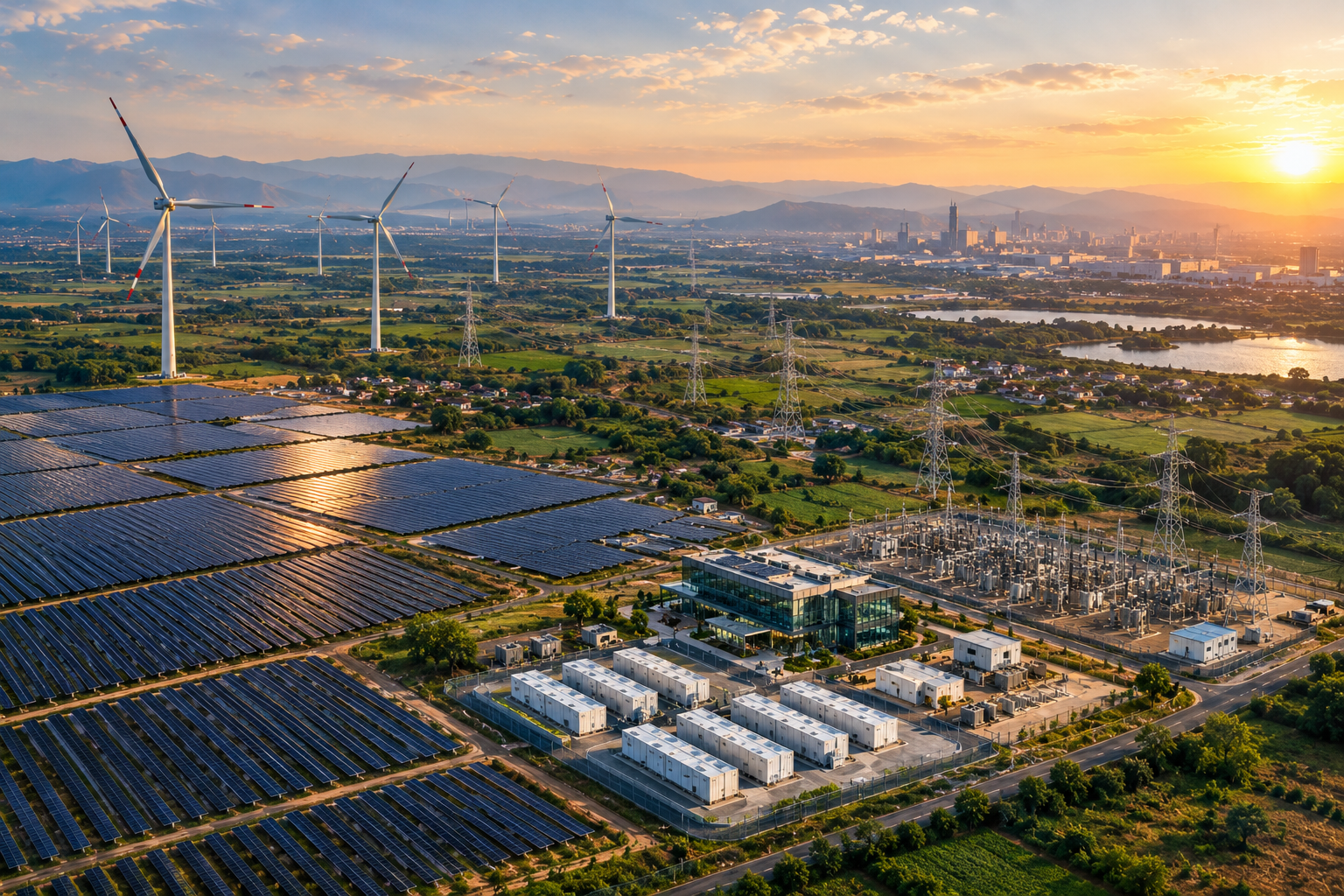
For India and other rapidly developing economies, this perspective reinforces the importance of building not just more solar and wind capacity, but a complete clean-energy ecosystem incorporating BESS, smart grids, transmission, AI, diversified renewable technologies and supportive energy policies.