 openaccessexchange@gmail.com
 Mon - Fri: 9 AM to 8 PM


Floating Solar Gains Momentum in India as Project Pipeline Surpasses 1 GW
 June 18, 2026
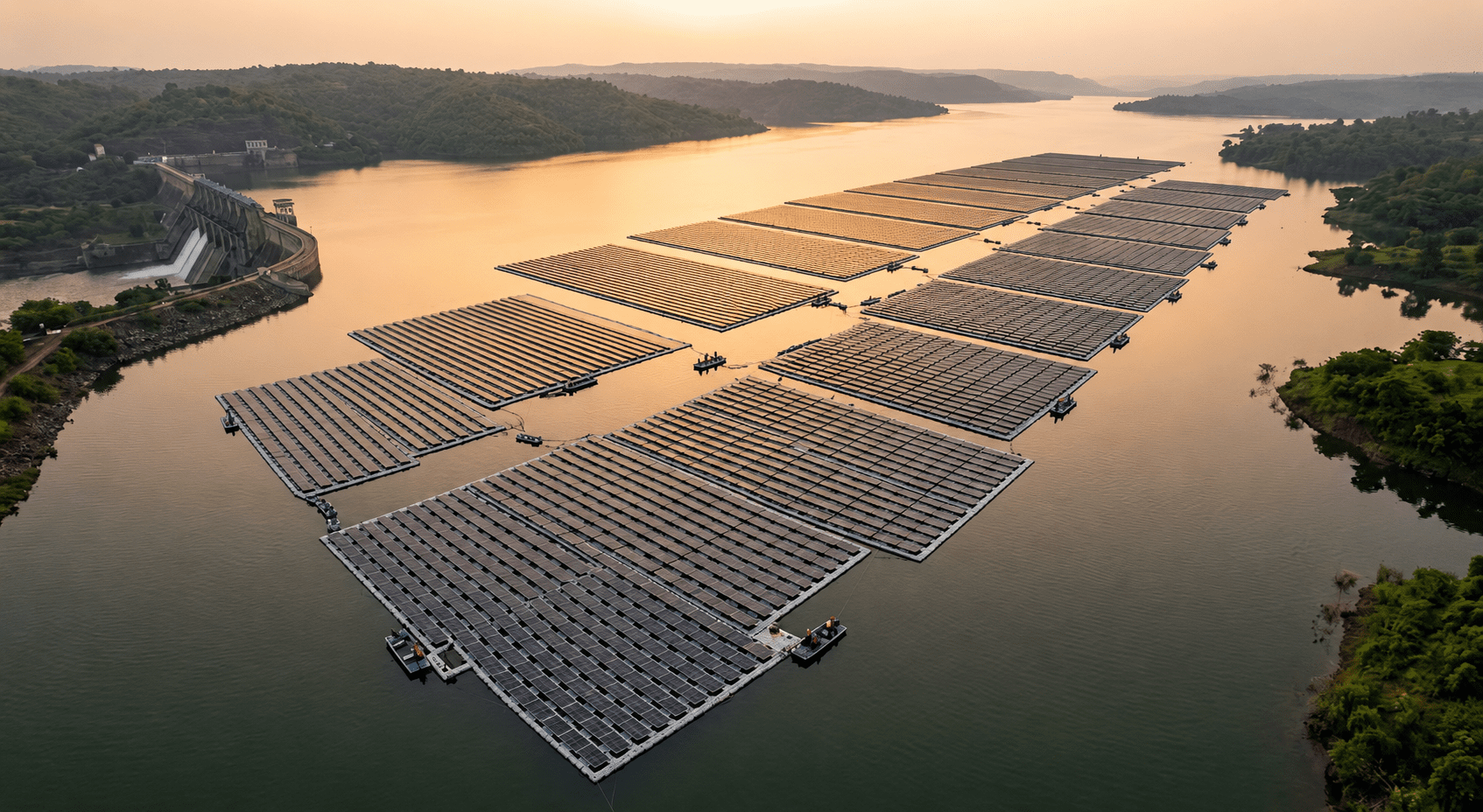
India’s floating solar industry is steadily gaining traction, with the country’s project pipeline now exceeding 1 GW. The achievement highlights the growing interest in utilizing reservoirs, lakes, and other water bodies for solar power generation as India accelerates its transition toward cleaner energy sources. Industry experts believe floating solar installations can play a crucial role in addressing land availability challenges while supporting the nation’s renewable energy ambitions.
The technology offers several advantages over conventional ground-mounted solar projects. By installing solar panels on water surfaces, developers can reduce land acquisition requirements, improve energy generation efficiency due to the cooling effect of water, and help limit water evaporation from reservoirs. Despite these benefits, the current deployment level remains only a fraction of the country’s estimated floating solar potential, which is believed to exceed 100 GW across suitable water bodies.
As India continues to expand its renewable energy portfolio, policymakers and industry stakeholders are increasingly exploring innovative solutions to diversify clean energy generation. The rapid growth of the solar sector, coupled with rising investments in energy storage and grid infrastructure, is creating favorable conditions for floating solar development. However, challenges such as project financing, regulatory approvals, environmental assessments, and infrastructure readiness will need to be addressed to unlock the segment’s full potential.
With the country targeting substantial renewable energy capacity additions over the coming years, floating solar is emerging as a promising avenue for sustainable power generation. Strategic deployment of projects on reservoirs and other water bodies could help India optimize available resources, strengthen energy security, and move closer to its long-term clean energy and decarbonization goals.